Side Dishes
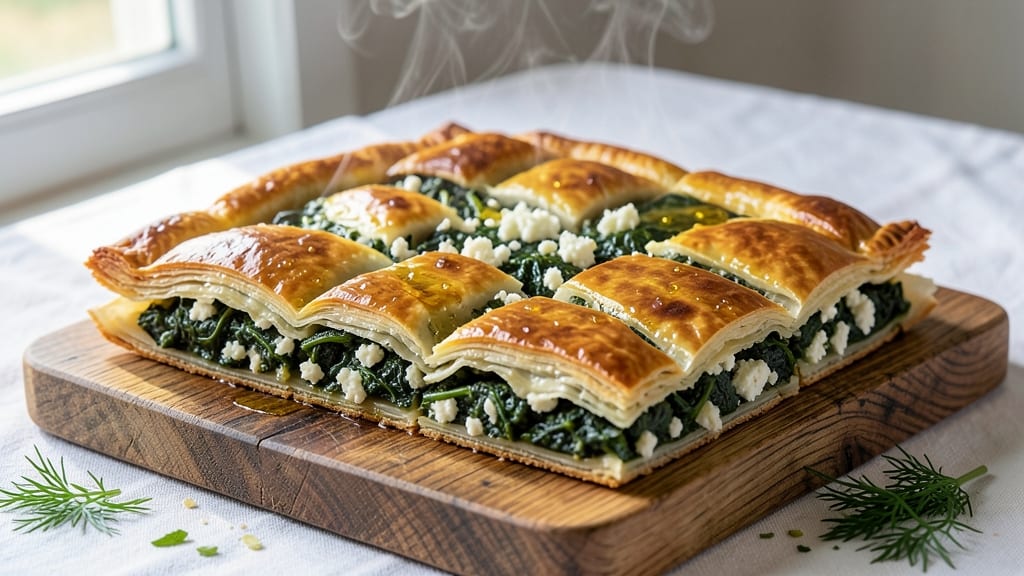
This baked spanakopita recipe delivers flaky, golden layers that taste like a Mediterranean bakery—without the fuss of a deep fryer. The secret lies in crisp phyllo dough and a savory spinach-feta filling that balances tangy, herby, and creamy notes perfectly.
I’ve perfected this version after years of testing, ensuring each layer stays tender yet crisp enough to hold its shape.
What sets this recipe apart is the foolproof assembly technique: thinly sliced spinach wilted just enough to release moisture, then combined with feta, eggs, and herbs for a filling that won’t make your phyllo soggy.
The dough layers are brushed with melted butter between each fold, creating that signature crispy lattice pattern. Baking at 350°F for 40 minutes ensures even cooking without burning.
By the time it emerges from the oven, you’ll have a dish with shatteringly crisp edges, tender phyllo layers, and a filling so rich it pulls apart cleanly.
The aroma alone—warm, buttery, and herby—will have everyone reaching for seconds. This is the kind of side dish that elevates any meal, from family dinners to holiday spreads.
Serve warm with a squeeze of lemon or a dollop of tzatziki for extra brightness. The leftovers reheat beautifully, making it ideal for meal prep. Here’s how to assemble it like a pro—no experience required.
Ingredients for baked spanakopita
Sixteen ingredients transform into golden, flaky layers that taste like Mediterranean bakery magic.
| Ingredient | Amount | Notes |
|---|---|---|
| Phyllo Dough Sheets 🍞 | 14 sheets | Thawed if frozen, stacked with towel |
| Fresh Spinach 🍃 | 10 oz | Hearts removed, chopped finely |
| Crumbled Feta Cheese 🧀 | 1 ½ cups | High-quality, drained well |
| Large Eggs 🥚 | 2 whole | Room temperature, beaten |
| Unsalted Butter 🧈 | ½ cup | Melted, for brushing layers |
| Extra-Virgin Olive Oil 🫒 | 2 tbsp | For wilting spinach |
| Fresh Dill 🌿 | ¼ cup | Chopped, stems removed |
| Fresh Parsley 🌿 | ¼ cup | Chopped, stems removed |
| Garlic Cloves 🧄 | 2 cloves | Minced, for spinach mixture |
| Lemon Juice 🍋 | 1 tbsp | Freshly squeezed, for brightness |
| Salt 🧂 | ¾ tsp | Kosher or sea salt |
| Ground Black Pepper 🌶️ | ½ tsp | Freshly ground, for seasoning |
| Nutmeg 🌿 | ¼ tsp | Freshly grated, for depth |
The phyllo dough is non-negotiable—Filoflo or Goya are my go-tos, but any brand will work if it’s thin and crisp. Keep it covered with a damp towel to prevent drying. For the spinach, baby spinach or fresh spinach leaves are ideal—avoid pre-washed bags, which often wilt faster. The feta must be high-quality, crumbled by hand—pre-shredded versions contain anti-caking agents that make the filling gummy. Whole Foods or local specialty stores carry the best brands for this dish.
No fresh dill? Dried dill at one-third the amount works, but fresh is ideal for that bright, herby punch. Running short on parsley? Fresh cilantro or basil can stretch it, though the flavor will shift slightly. The garlic can be pre-minced from a jar in a pinch, but fresh minced is always better. For extra richness, add 1 tbsp of crumbled goat cheese to the filling. The lemon juice is crucial—bottled lemon juice works, but fresh is more vibrant. Nutmeg is optional but adds a subtle warmth that elevates the dish.
Assemble the spanakopita up to 24 hours ahead and refrigerate—it’s easier to handle cold dough. Once baked, let it cool completely before slicing to prevent crumbling. Store leftovers in an airtight container at room temperature for 2 days or refrigerate for 4 days. Reheat slices in a 350°F oven for 5-7 minutes to restore crispiness. Freeze unbaked layers for 2 months—bake straight from frozen, adding 5-10 minutes to the cooking time.
Why You'll Love This Recipe
- No-Fuss Assembly: I swear by the phyllo dough trick—just brush each sheet with butter, stack, and fold. The spinach filling goes together in one bowl while the oven preheats, and honestly? No one will guess it took less than 20 minutes.
- Salty-Sweet Magic: That crispy butter-phyllo layer with the creamy feta and wilted spinach? It’s the kind of combo that makes you reach for seconds without thinking. The egg wash ties everything together—golden crust, tangy filling, and zero regret.
- Lunchbox Hero: Between us, this is my go-to for meal prep. Slice it into squares, pack them with a sprinkle of extra feta, and they stay fresh for days. My kids grab them for school lunches, and I still sneak bites from the container.
- Budget Crust Perfection: Phyllo dough is cheaper than you’d think, and a single batch feeds four. Leftovers? Even better—reheat slices in the toaster or oven, and they taste like you just pulled them from the oven. My wallet and taste buds win.
Step-by-step instructions for baked spanakopita
Here's how to achieve that signature flaky texture with crispy layers and tender spinach filling.
Prepare the Spinach and Cheese Filling
Heat the 2 tablespoons extra-virgin olive oil in a large skillet over medium heat. Add the 10 ounces finely chopped fresh spinach and cook for 3-4 minutes until the leaves wilt completely and release their moisture. The spinach should collapse into a dense, vibrant green pile with no crisp edges remaining.
Add the 2 minced garlic cloves and cook for 30 seconds until fragrant. Stir in the 0.75 teaspoon salt, 0.5 teaspoon ground black pepper, and 0.25 teaspoon nutmeg, letting the spices bloom for 1 minute. Remove from heat and transfer to a mixing bowl. Add the 1.5 cups crumbled feta cheese, 0.25 cup chopped fresh dill, 0.25 cup chopped fresh parsley, and 1 tablespoon lemon juice. Mix gently until just combined—don't overwork the filling or it will become dense.
Let the mixture cool completely before using. This prevents the phyllo dough from becoming soggy when assembled. The filling should be cool enough to touch but still slightly warm when you handle it.
Assemble the Spanakopita Layers
Preheat your oven to 375°F. Place the 14 sheets phyllo dough sheets between two layers of damp paper towels to prevent them from drying out as you work. This is crucial for maintaining their delicate structure.
Working quickly (phyllo dries out fast), brush one sheet with 1 tablespoon melted unsalted butter, then layer another sheet on top. Repeat until you have a stack of 4 sheets. Cut the stack in half lengthwise to create two rectangles. Brush these rectangles with another 1 tablespoon melted butter each.
Spread half of the spinach-feta mixture evenly over one rectangle, leaving a ½-inch border around the edges. Fold the sides inward, then roll tightly from the long side to form a log. Repeat with the remaining phyllo and filling. Place the logs seam-side down on a parchment-lined baking sheet.
Create the Top Layers for Flaky Perfection
Brush the remaining 8 phyllo dough sheets with melted butter as you work, keeping them covered with damp towels. Cut these sheets into strips about 2 inches wide. Arrange the strips diagonally across the top of each log, slightly overlapping them like shingles. This creates that classic spanakopita lattice pattern.
Brush the entire top with the remaining melted butter until it glistens. The butter should coat all exposed phyllo surfaces—this is what creates those irresistible crispy layers. For extra flakiness, I like to sprinkle a pinch of salt and pepper over the top before baking.
Bake Until Golden and Crisp
Bake for 35-40 minutes until the phyllo is deep golden brown and the filling is bubbling through the cracks. The edges should be crispy while the center remains tender. If the top browns too quickly, loosely cover with foil for the last 10 minutes to prevent over-browning.
Remove from the oven and let rest for 10 minutes before serving. This resting period allows the layers to set and prevents the filling from leaking when you cut into it. The spanakopita should have a crisp exterior that shatters slightly with each bite, revealing tender layers of spinach and feta underneath.
Serve Warm with Classic Accompaniments
Slice the spanakopita into 1-inch thick pieces using a sharp knife or serrated bread knife. The layers should separate cleanly if properly assembled. Serve immediately while still warm, as the phyllo loses its crispness as it cools.
Pair with a simple Greek salad, warm pita bread, or a dollop of tzatziki sauce. The contrast between the crispy phyllo and creamy feta makes each bite irresistible. For extra flakiness, reheat slices in a 350°F oven for 5-7 minutes before serving if needed.
Pro Tips For Making Baked Spanakopita
- Brush Butter Like a Pro: Slather that unsalted butter on every single phyllo layer—don’t half-ass it. I used to skip the corners, and they’d stay dry and chewy. Two tablespoons per sheet, spread thin but even, and keep a bowl of melted butter nearby to re-melt as you go. Cold butter hardens fast, and you’ll regret rushing.
- Squeeze Spinach Dry: Fresh spinach is 90% water, and soggy filling = sad spanakopita. After wilting, squeeze the hell out of it in a clean kitchen towel or cheesecloth—no blenders, no excuses. I learned this the hard way when my first batch leaked like a sieve. The drier, the better.
- Don’t Overfill the Layers: Pack the spinach-feta mix snugly but leave room to breathe—about ¾ full per phyllo layer. Overstuffing makes the dough puff unevenly and can split when baking. Think of it like a tight burrito, not a stuffed sausage. Trust me, your future self will notice.
- Bake Until Golden: Skip the "just until it looks done" guesswork—bake until the top is deep golden brown, not pale yellow. I used to pull mine out too soon, and it’d taste undercooked. Aim for 350°F (175°C) for 40-45 minutes, checking at 35. The crust should crackle like a fresh bakery piece.
Common mistakes when making great baked spanakopita
Over-Wilting Spinach
I’ve seen beginners cook the spinach until it’s a dry, mushy pile instead of a vibrant, juicy filling. The key is wilting just enough to release moisture—about 3-4 minutes over medium heat—until it collapses into a dense, glossy mass.
If it looks like it’s drying out too much, add 1 tablespoon water to the pan and cover for 30 seconds to restore moisture. Over-wilting makes the filling dense and can lead to soggy phyllo layers. 💫
Skipping Butter Layers
Some recipes suggest using olive oil for brushing between phyllo layers, but nothing beats melted butter for that signature flakiness. The butter’s fat content creates steam during baking, which separates the layers beautifully. I brush each sheet with about 1 teaspoon butter—don’t skimp!
If you’re avoiding dairy, use a neutral oil like avocado oil, but expect slightly less crispness. The butter also adds a subtle richness that balances the tangy feta.
Not Resting the Filling
Rushing to assemble the spanakopita while the filling is still warm is a recipe for disaster. The residual heat from the filling will steam the phyllo, making it soggy instead of crisp.
Let the filling cool completely—about 15-20 minutes—before using. You can even chill it in the fridge for 30 minutes to firm it up. This step is non-negotiable for that perfect texture.
Using Pre-Shredded Feta
Pre-shredded feta contains anti-caking agents that turn the filling gummy and make the phyllo soggy. Always use high-quality, crumbled feta—brands like Saga or Tzortzia are my favorites.
If you’re in a pinch, drain pre-shredded feta in a sieve for 10 minutes to remove excess moisture, but it won’t be as flavorful. The texture difference is night and day.
Overcrowding the Pan
Placing both spanakopita logs too close together on the baking sheet can cause uneven cooking and steam buildup, leading to soggy bottoms. Leave at least 2 inches of space between them for proper air circulation.
If your baking sheet is small, bake one log at a time, rotating the pan halfway through for even browning. A half-sheet pan is ideal for this recipe.
Cutting Phyllo Improperly
When assembling the phyllo layers, some people cut the sheets unevenly, which leads to messy rolls and uneven baking. Use a sharp knife or pizza cutter to trim the edges straight and create clean rectangles.
For the lattice top, cut the strips into 2-inch-wide pieces—any narrower, and they’ll crisp too quickly; any wider, and they won’t brown evenly. Keep the strips slightly overlapping for that classic shingled look. 🔥
Nutrition facts
Frequently asked questions
Can I make baked spanakopita ahead of time?
Assemble the spanakopita up to 24 hours ahead and refrigerate it uncovered. This makes handling the phyllo easier when cold. Bake straight from the fridge, adding 5-10 extra minutes to the cooking time. For best texture, serve within 2 days of baking—after that, reheat slices in a 350°F oven for 5-7 minutes to restore crispiness.
What’s the best way to store leftovers?
Keep baked spanakopita in an airtight container at room temperature for 2 days or refrigerate for 4 days. For longer storage, freeze unbaked layers for 2 months—bake straight from frozen, adding 5-10 minutes to the time. Always reheat slices in the oven to maintain that crispy phyllo texture. Never microwave, as it makes the layers rubbery.
Can I substitute feta cheese?
While traditional, you can swap feta for ricotta or goat cheese (1:1 ratio) for a milder flavor. For extra richness, add 1 tbsp cream cheese to the filling. Avoid pre-shredded feta—it contains anti-caking agents that make the filling gummy. If using a substitute, adjust seasoning: goat cheese needs more salt, while ricotta benefits from extra nutmeg.
Why did my phyllo turn soggy?
Soggy phyllo usually means the filling was too wet or the dough dried out. Ensure your spinach is fully wilted but not overcooked—it should release moisture but stay vibrant. Cool the filling completely before assembling, and keep phyllo covered with a damp towel while working. If the filling is still too wet, add 1 tbsp extra feta to absorb moisture.
How do I make it extra crispy?
For maximum crispiness, brush every phyllo layer with melted butter (not oil) and bake at 375°F until golden brown. Preheat your oven thoroughly and use a half-sheet pan for even heat distribution. For a restaurant-style finish, broil for 1-2 minutes at the end—watch closely to avoid burning.