
Salads
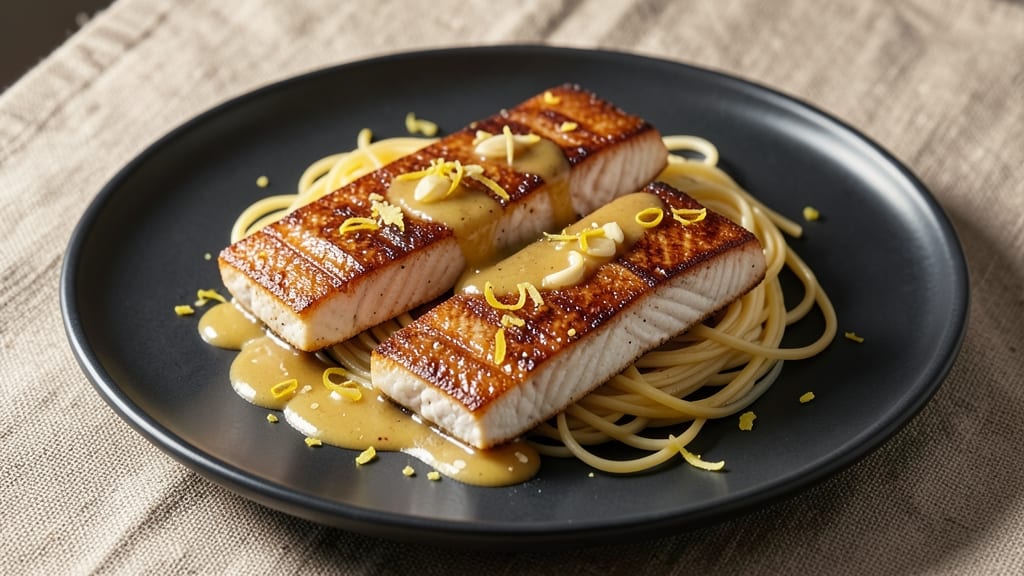
This halibut pasta recipe delivers a perfect balance of delicate fish and al dente noodles, all tied together with a bright lemon butter sauce and a crispy crust that elevates every bite.
The secret lies in searing the halibut just until it develops that golden crust while keeping the inside tender—no overcooking here. I’ve tested this dish countless times, and the difference between a good seafood pasta and an exceptional one comes down to timing and technique.
The recipe starts with perfectly cooked pasta—al dente, so it holds up to the sauce without turning mushy. Meanwhile, the halibut develops a crispy crust on the outside while staying moist inside, thanks to a simple pan-searing method.
The lemon butter sauce infuses every strand of pasta with zesty brightness, cutting through the richness of the fish and butter.
What you’ll end up with is a plated dish that looks as impressive as it tastes: flaky halibut with a crispy crust, nestled among strands of pasta coated in a velvety lemon butter sauce.
Garnish with fresh herbs and a squeeze of lemon to add that final pop of color and freshness. This is the kind of meal that feels special without requiring hours in the kitchen.
Serve it with a simple arugula salad or roasted asparagus to round out the plate. The crispy crust on the halibut adds texture contrast, while the sauce ensures every bite is cohesive and flavorful. Ready to make restaurant-quality seafood pasta at home?
Ingredients for halibut pasta
Twelve simple ingredients transform into restaurant-quality halibut pasta with crispy crust perfection.
| Ingredient | Amount | Notes |
|---|---|---|
| Halibut Fillets 🐟 | 2 whole | Skin-on, 6-8 oz each |
| Spaghetti 🍝 | 12 oz | Al dente pasta preferred |
| Unsalted Butter 🧈 | ½ cup | Cold, cut into pieces |
| Fresh Lemon Juice 🍋 | ¼ cup | From 2-3 lemons |
| Zest of 1 Lemon 🍋 | 1 tbsp | Finely grated |
| Garlic Cloves 🧄 | 4 cloves | Minced, fresh preferred |
| Fresh Parsley 🌿 | ¼ cup | Chopped, flat-leaf preferred |
| Extra-Virgin Olive Oil 🫒 | 2 tbsp | For searing halibut |
| Salt 🧂 | 1 ½ tsp | Kosher or sea salt |
| Ground Black Pepper 🌶️ | ½ tsp | Freshly cracked |
| All-Purpose Flour 🌾 | 1 tbsp | For sauce thickening |
| Shallot 🧅 | 1 whole | Minced, optional for depth |
The halibut makes or breaks this dish—look for firm, translucent fillets with minimal fishy odor. Whole Foods or local seafood markets often carry the freshest cuts, but don't overlook your grocery store's seafood counter if it's well-stocked. For best results, use fillets with skin on—the crispy skin becomes part of the crust. If you can't find halibut, cod or flounder work as substitutes, though texture will differ slightly. The pasta should be high-quality, preferably bronze-die for better texture. The butter needs to be unsalted and cold for proper searing—don't use salted or melted. Fresh lemon is non-negotiable here; bottled juice lacks the bright acidity needed to cut through the richness.
No fresh parsley? Fresh basil or chives work in a pinch, though parsley's clean flavor is ideal. Short on shallot? Extra garlic cloves will do, but reduce to 3 cloves total. For the sauce, if you prefer a thinner consistency, use half the flour and add a splash of pasta water. The lemon juice can be substituted with white wine vinegar if needed, though fresh lemon adds the best brightness. For extra richness, add 1 tbsp heavy cream to the sauce. Always taste as you go—the sauce should be tangy but balanced, not overpowering the delicate fish flavor. The key to the crispy crust is high heat and patience—don't rush the searing.
Store leftover halibut in an airtight container with a paper towel to absorb moisture for up to 2 days. Pasta reheats best in the sauce it was cooked in—just add a splash of water to loosen. The lemon butter sauce keeps for 3 days in the fridge, though it's best used fresh. For meal prep, cook the pasta and sauce separately, then combine before serving to maintain texture. The crispy crust won't survive reheating well, so it's best served fresh. If you're making this ahead, cook the pasta, sear the halibut, and store components separately—reassemble right before serving for that restaurant-quality presentation.
Why You'll Love This Recipe
- Foolproof Timing: I swear by this recipe when I’m staring at the clock at 6:45 PM. Halibut sears in 4 minutes flat—no waiting for it to thaw or overcook—while the pasta boils in the same pot. That lemon zest hits the butter like a wake-up call, and suddenly, dinner’s ready before the kids even finish their show.
- Bright & Buttery Magic: The butter and lemon juice create this insane contrast—silky richness meets zesty punch. Halibut stays tender but flakes apart at the touch of a fork, soaking up every drop of that bright, citrusy sauce. It’s the kind of dish where you take the first bite and immediately plan your next grocery trip.
- Weeknight to Date Night: Honestly, this is my go-to when I don’t want to stress. For me, it’s a Tuesday night with takeout containers staring back, or a Friday when I’m trying to impress someone who actually cooks. The halibut feels fancy, but the prep is so simple—no one will guess it took less than 30 minutes.
- Leftovers That Don’t Suck: Between us, most pasta leftovers are sad. Not this one. The halibut reheats perfectly, and the lemon keeps it from getting rubbery. I’ll pack half for lunch the next day, and it’s still just as good—maybe even better, because the flavors meld overnight. Plus, it’s cheaper than ordering in. Win.
Step-by-step instructions for halibut pasta with lemon butter sauce
Here's how to achieve perfectly crispy halibut with a silky lemon butter sauce—every detail matters.
Create the Crispy Halibut Crust
Pat the 2 whole halibut fillets completely dry with paper towels, including the skin side. Season both sides generously with 1.5 teaspoons salt and 0.5 teaspoon ground black pepper, pressing the seasoning into the flesh. Heat 2 tablespoons extra-virgin olive oil in a large skillet over medium-high heat until shimmering.
Place the fillets skin-side down in the pan and cook undisturbed for 3-4 minutes until the skin becomes deep golden brown and crispy. You'll see the edges curl slightly—that's your signal to flip. Cook the other side for 2-3 minutes until it reaches 145°F internally. Transfer to a warm plate and tent loosely with foil to keep warm while you prepare the pasta.
Build the Lemon Butter Sauce
In the same skillet (no need to clean it), reduce heat to medium and add the 1 whole minced shallot. Sauté for 1-2 minutes until softened and translucent. Add the 4 cloves minced garlic and cook for 30 seconds until fragrant—don't let it brown or it'll turn bitter.
Pour in the 0.25 cup fresh lemon juice and scrape up any browned bits from the bottom. Let it simmer for 1 minute to reduce slightly. Remove from heat and whisk in the 0.5 cup cold unsalted butter cut into pieces, along with the 1 tablespoon lemon zest. The sauce should become glossy and emulsified. If it looks too thick, whisk in 1 tablespoon water to loosen it.
Cook the Perfect Al Dente Pasta
Bring a large pot of salted water to a rolling boil (it should taste like the sea). Add the 12 oz spaghetti and cook until 1 minute shy of package directions for al dente. Reserve 1 cup pasta water before draining—this starchy liquid is essential for the sauce. Drain the pasta but don't rinse it; the surface starch helps the sauce cling.
Return the drained pasta to the pot and toss with 1 tablespoon all-purpose flour. This creates a slight thickening agent for the sauce. Add the pasta to the lemon butter sauce in the skillet and toss vigorously for 1-2 minutes until everything is evenly coated. If the sauce seems too thick, add 2-3 tablespoons reserved pasta water to reach your desired consistency.
Finish and Serve
Gently fold the crispy halibut fillets into the pasta sauce, spooning some sauce over each piece to keep them moist. Stir in the 0.25 cup chopped fresh parsley and taste for seasoning. You might need a pinch more salt or a squeeze of lemon to balance the flavors.
Serve immediately while the halibut is still warm and the crust remains crispy. The pasta should be perfectly al dente with a glossy lemon butter sauce clinging to every strand, and the halibut should have a beautiful golden crust that contrasts with the tender flesh inside. Garnish with additional parsley if desired.
Pro Tips For Making Halibut Pasta
- CRISP THE HALIBUT FIRST: Skip the raw fish-on-pasta combo—sear the halibut in a screaming-hot pan (2 minutes per side, skin-side down) before tossing with the pasta. The butter will cling to the crispy edges, and the lemon won’t overpower the texture. I learned this the hard way after serving mushy fish that vanished into the sauce.
- SALT THE PASTA WATER LIKE THE OCEAN: Halibut’s delicate flavor needs the pasta to carry weight—use a full tablespoon of salt per 4 quarts of water. Taste it: it should sting your tongue. Unsalted butter later won’t cut it if the pasta’s bland. (Yes, even if you’re impatient like me, wait for it to boil properly first.)
- ZEST BEFORE JUICE: Grate the lemon zest first, then juice it—toss the zest into the pasta water while it cooks. The heat releases its oils, infusing every strand with bright, aromatic punch. Save the juice for finishing; it’ll keep the halibut from turning rubbery. (Your future self will notice the difference.)
- DON’T OVERMIX THE SAUCE: Toss the cooked pasta with butter and lemon just until coated—a few twirls of the fork, not a full-blown stir-fry. Halibut falls apart when smothered, and the sauce turns gluey. Add the fish last, let it rest 30 seconds, then fold gently. This isn’t a casserole; it’s a marriage, not a mudslide.
Flavor customization for this recipe
Spicy Citrus Twist
For a bold kick, add 1 teaspoon Penzeys Red Pepper Flakes to the lemon butter sauce while whisking in the cold butter. This adds heat without overpowering the delicate halibut.
I also like to finish with ½ teaspoon cayenne pepper and a squeeze of lime juice instead of lemon for a tangier, spicier profile. 🌶️
Creamy Garlic Parmesan
Swap the lemon butter sauce for a rich garlic parmesan version by melting ½ cup heavy cream with ½ cup grated Parmesan and 3 minced garlic cloves in the skillet.
Stir in 1 tablespoon lemon zest and 2 tablespoons fresh parsley at the end. This adds a velvety texture that contrasts beautifully with the crispy halibut crust.
Herb-Infused Olive Oil
Replace the butter in the sauce with ½ cup high-quality extra-virgin olive oil infused with 1 tablespoon fresh thyme, 1 tablespoon fresh rosemary, and 2 minced garlic cloves.
Simmer the oil with the garlic for 1 minute before adding the lemon juice. This Mediterranean-inspired twist adds earthy depth while keeping the dish light.
Smoky Chipotle Kick
For a smoky, spicy variation, stir 1 teaspoon adobo sauce (from canned chipotle peppers) into the lemon butter sauce. Add ½ teaspoon smoked paprika while searing the halibut for an extra layer of complexity. This works especially well with linguine pasta for a rustic presentation. 🔥
White Wine Reduction
Deglaze the skillet with ½ cup dry white wine instead of lemon juice, reducing it by half before adding the butter. Finish with 1 tablespoon lemon zest and a splash of lemon juice to brighten the rich wine flavors.
This elevates the dish to a restaurant-worthy level with minimal extra effort.
Sun-Dried Tomato Pesto
Replace half the butter with 2 tablespoons sun-dried tomato pesto (store-bought or homemade). Add 1 tablespoon chopped kalamata olives and ½ teaspoon red pepper flakes for a briny, fruity contrast. This variation works especially well with fettuccine pasta for a heartier dish.
Nutrition facts
Frequently asked questions
Can I use frozen halibut instead of fresh?
Yes, but thaw it properly for best results. Place the frozen fillets in the refrigerator overnight in a sealed bag to thaw slowly. Pat them completely dry before seasoning and searing—any moisture will prevent the crispy crust from forming. For extra insurance, let the fillets sit at room temperature for 10 minutes before cooking.
What's the best pasta shape for this recipe?
Spaghetti is ideal for coating in the sauce, but linguine or fettuccine work beautifully too. For a heartier dish, try pappardelle or tagliatelle. Avoid very small shapes like penne or farfalle—they don't hold the sauce as well. The wider the noodle, the more sauce it can cling to and the more impressive the presentation.
How do I prevent the halibut from drying out?
Never overcook the halibut—the internal temperature should reach 145°F max. Cook it skin-side down first for 3-4 minutes until golden, then flip for 2-3 minutes. Keep the fillets warm in a 200°F oven while finishing the pasta. If they cool too much, the crust will lose its crispiness.
Can I make this ahead of time?
Cook the pasta and sauce separately, then combine right before serving to maintain texture. Store the halibut in an airtight container with a paper towel for up to 2 days. Reheat only the sauce and pasta together—never reheat the halibut separately, as it will turn rubbery. The crispy crust is best enjoyed fresh, so plan to assemble everything within 30 minutes of cooking.
What are good wine pairings for this dish?
A crisp Sauvignon Blanc or Pinot Grigio complements the lemon butter sauce beautifully. For red wine lovers, a light Pinot Noir won't overpower the delicate fish. Avoid heavy wines like Cabernet Sauvignon—they'll clash with the bright citrus flavors. A chilled dry rosé also works wonderfully as a summer option.