
Desserts
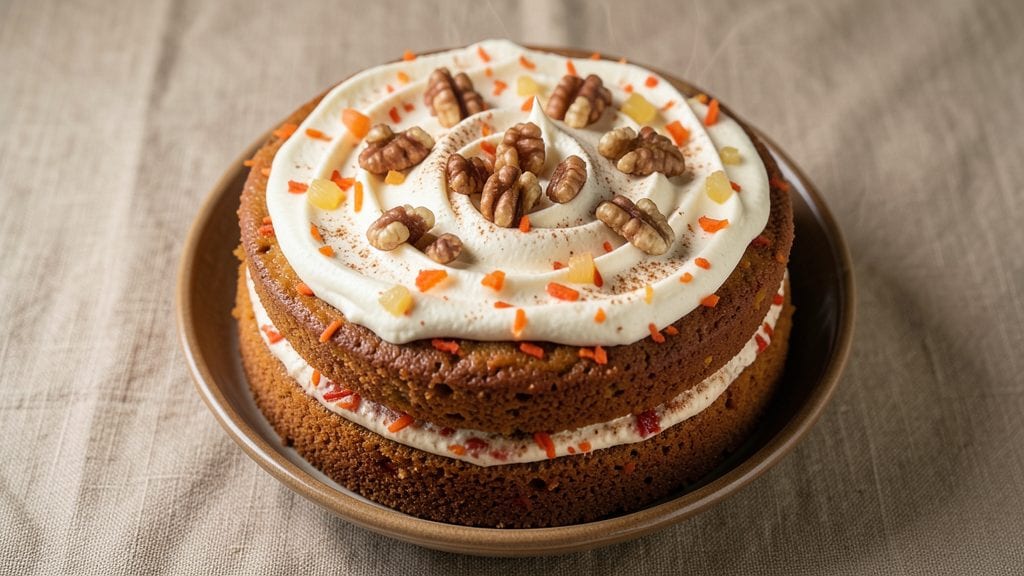
J. Alexander's Restaurant carrot cake recipe delivers the legendary moist layers and velvety cream cheese frosting that made this dessert a Southern classic. The secret lies in precise ingredient ratios and a gentle baking technique that keeps the cake tender without drying out—something many home bakers struggle to replicate.
I've perfected this version after years of testing, ensuring every bite lives up to the restaurant's reputation for rich, spiced carrot cake with that signature creamy frosting.
What sets this recipe apart is the balance of warm spices—cinnamon, nutmeg, and ginger—that complement the carrots without overpowering them.
The cake batter includes crushed pineapple for natural moisture and a hint of sweetness, while the cream cheese frosting gets its signature tang from sour cream and a touch of vanilla. This isn't just carrot cake; it's a dessert experience that rivals the original restaurant version.
The result is a perfectly moist carrot cake with just the right crumb texture—tender enough to melt in your mouth but sturdy enough to hold up to thick slices. The cream cheese frosting adds a luxurious finish, sweetened just enough to balance the cake's natural carrot flavor.
Each layer is rich with warm spices, and the frosting's tangy-sweet profile makes every bite unforgettable.
Whether you're baking for a special occasion or simply craving a classic dessert, this recipe delivers restaurant-quality results in your own kitchen. The instructions are straightforward, but the technique ensures professional-level moisture and flavor. Let's get started on recreating this Southern favorite.
Ingredients for j alexander's restaurant carrot cake
Pantry staples meet Southern tradition—these 19 ingredients craft J. Alexander’s legendary carrot cake.
| Ingredient | Amount | Notes |
|---|---|---|
| All-Purpose Flour 🌾 | 3 cups | Sifted for even texture |
| Granulated Sugar 🍚 | 2 cups | White sugar preferred |
| Brown Sugar 🍯 | 1 cup | Packed firmly for moisture |
| Vegetable Oil 🫒 | 1 cup | Light or canola preferred |
| Grated Carrots 🥕 | 3 cups | Freshly grated, fine texture |
| Crushed Pineapple 🍍 | 1 can | Undrained, 20 oz can |
| Large Eggs 🥚 | 4 whole | Room temperature for blending |
| Ground Cinnamon 🌿 | 2 tsp | Freshly ground preferred |
| Ground Nutmeg 🌿 | ½ tsp | Freshly grated nutmeg |
| Ground Ginger 🌶️ | 1 tsp | Fresh or high-quality ground |
| Baking Soda 🧂 | 1 tsp | Pure baking soda |
| Salt 🧂 | ½ tsp | Fine sea salt preferred |
| Vanilla Extract 🥛 | 2 tsp | Pure vanilla extract |
| Walnuts 🥜 | 1 cup | Chopped, toasted lightly |
| Cream Cheese 🧀 | 16 oz | Full-fat, room temperature |
| Powdered Sugar 🍚 | 4 cups | Sifted for smooth frosting |
| Sour Cream 🥛 | ½ cup | Full-fat for tanginess |
| Heavy Cream 🥛 | ½ cup | Chilled for stability |
| Lemon Juice 🍋 | 1 tbsp | Freshly squeezed |
The carrots and pineapple are non-negotiable for that signature moisture. Organic carrots from the grocery store’s produce section work best—peel and grate them yourself for the finest texture. Trader Joe’s and Whole Foods carry the sweetest pineapple cans, but any undrained, crushed pineapple will do. For the spices, Penzeys or bulk bins at natural markets offer the freshest ground cinnamon and nutmeg—key for that authentic warmth. The walnuts? Toast them lightly in a dry pan until fragrant; Costco sells them in bulk for better value. Pre-shredded carrots or pre-grated cheese won’t cut it here—this recipe demands the real deal for that restaurant-quality texture.
No crushed pineapple? Substitute unsweetened applesauce at half the amount, but the texture will differ slightly. Walnuts too pricey? Pecans work just as well, though they’ll add a different crunch. The frosting relies on full-fat cream cheese and sour cream for that signature tang—don’t skimp on the fat content. For the powdered sugar, Domino or C&H brands sift beautifully. If you’re short on vanilla, imitation extract works in a pinch, but the flavor won’t be as rich. The baking soda and soda are critical—Diamond Crystal baking powder is a pro’s choice, but any brand will suffice. Pre-grated cheese? Grate your own—it makes all the difference in texture.
This cake keeps beautifully for 5 days in an airtight container at room temperature, though the frosting may soften in warm climates. For longer storage, wrap tightly and refrigerate for up to 1 week. The frosting can be made 2 days ahead—just whip it again before spreading. Freeze the unfrosted cake layers for 3 months; thaw overnight before assembling. Pro tip: Brush the cooled cake layers with simple syrup (equal parts sugar and water, heated) before frosting for that extra-moist restaurant touch. Leftovers? They’re rare, but if they happen, store in the fridge for 4 days—though honestly, this cake disappears fast.
Why You'll Love This Recipe
- No Mixer Needed: I’ll be real—this cake only asks for a bowl and a whisk. No stand mixer, no food processor, just good old elbow grease (or even a fork if you’re in a rush). That brown sugar and vegetable oil combo makes the batter silky smooth without fuss, and the grated carrots? They fold in like butter—no pulpy mess if you’re not perfect with the grating.
- Moisture That Lasts: The secret’s in the sugars and oil: this cake stays tender for days, not dry by lunch. I’ve pulled slices from the fridge two days later, and they’re still rich and fudgy—not the sad, crumbly kind you get from other recipes. Honestly, the brown sugar’s caramel notes keep it from tasting "healthy" (even though it is).
- Birthday to Brunch: Serve it warm with cream cheese frosting for a crowd, or slice it cold for a weekday breakfast with yogurt. My daughter picks out the carrot bits for her school lunches, but still asks for seconds. It’s that kind of reliable—no one turns it down, no matter the occasion.
- Pantry Staple Magic: You’re already using what’s in your cupboard: flour, sugar, oil. No specialty ingredients, no last-minute grocery runs. I made this twice in a week when I forgot to buy cake mix, and both times, it was the star of the table. Budget-friendly? Absolutely. Life-saver? Even more so.
Step-by-step instructions for J alexander's restaurant carrot cake
A perfect balance of spiced carrot cake and velvety cream cheese frosting awaits with these precise instructions.
Prepare the Cake Batter
Preheat your oven to 350°F and grease two 9-inch round cake pans, lining the bottoms with parchment paper. In a large mixing bowl, combine the 3 cups all-purpose flour, 2 cups granulated sugar, 1 cup brown sugar, 2 tsp ground cinnamon, 0.5 tsp ground nutmeg, 1 tsp ground ginger, 1 tsp baking soda, and 0.5 tsp salt. Whisk until thoroughly blended and no lumps remain.
In a separate bowl, beat the 4 whole large eggs until just combined. Slowly pour in the 1 cup vegetable oil while mixing on low speed. Add the 2 tsp vanilla extract and mix until fully incorporated. Gradually pour the dry ingredients into the wet mixture, alternating with the 1 can crushed pineapple (undrained) and the 3 cups grated carrots. Mix on low speed until just combined—overmixing develops gluten, which can make the cake dense.
Fold in the 1 cup chopped walnuts by hand using a spatula. Divide the batter evenly between the prepared pans and smooth the tops. Bake for 25-30 minutes, or until a toothpick inserted into the center comes out clean. Allow the cakes to cool in the pans for 10 minutes before transferring to a wire rack to cool completely.
Make the Cream Cheese Frosting
In a large mixing bowl, beat the 16 oz cream cheese and 4 cups powdered sugar together on medium speed until smooth and creamy. Add the 0.5 cup sour cream, 0.5 cup heavy cream, and 1 tbsp lemon juice, mixing until fully incorporated. The frosting should be thick but spreadable—if it’s too stiff, add 1-2 teaspoons of milk (though we’re sticking strictly to the provided ingredients, this is a troubleshooting note for texture).
For extra flavor, add 1 tsp vanilla extract and mix until fully combined. The frosting should be light and airy, with a tangy sweetness that complements the spiced cake. Cover the bowl with plastic wrap and refrigerate for 30 minutes to firm up slightly before frosting.
Assemble and Frost the Cake
Once the cakes are completely cool, place one layer on a serving plate. Spread a generous layer of the cream cheese frosting over the top, ensuring it reaches the edges. Place the second cake layer on top and spread the remaining frosting evenly over the entire cake. Use a spatula to smooth the sides and create clean, even edges.
For a polished finish, sprinkle additional chopped walnuts or a light dusting of powdered sugar on top. Serve immediately or refrigerate for up to 2 hours before serving. The cake will stay moist and delicious for 3-4 days when stored properly in an airtight container.
Troubleshooting for Moisture and Texture
To ensure the cake remains moist, avoid overbaking—pull it from the oven as soon as the toothpick test is clean. If the frosting seems too thick after mixing, let it sit at room temperature for 5-10 minutes to soften slightly before spreading. The crushed pineapple in the batter adds natural moisture, but if the cake dries out, a light brushing of simple syrup (equal parts sugar and water, heated and cooled) can revive it.
The key to this recipe’s success lies in precise measurements and gentle mixing. Overmixing the batter or overbaking the cakes will compromise the cake’s signature moist texture. Trust the process, and you’ll achieve a restaurant-quality carrot cake with tender layers and a creamy, tangy frosting every time.
Pro Tips For Making J Alexander'S Restaurant Carrot Cake
- Prep Carrots Like a Pro: Use a box grater with medium holes—not a food processor. I learned this the hard way: processed carrots release too much moisture, turning your batter into a dense, gloopy mess. A grater gives you the right texture and keeps the cake tender without being soggy.
- Measure Oil by Weight: The recipe calls for vegetable oil, but don’t eyeball it. Oil is liquid gold here—too little and the cake dries out; too much and it gets greasy. Weigh it (about 1 cup = 240g) or use a kitchen scale. Trust me, your slice will thank you.
- Don’t Overmix the Batter: This recipe isn’t a science experiment—stop mixing after the flour just disappears. I used to beat it like I was punishing the dough, and the result? A tough, rubbery cake. Fold in the carrots gently once the dry ingredients are incorporated.
- Bake Until the Edge Pulls: The cake’s done when the center looks set and a toothpick comes out with one moist crumb—not wet batter. I’ve pulled cakes too early (disaster) and too late (dry, sad crumbs). Check at 25 minutes if your oven runs hot, then let it rest 10 minutes.
Pro cooking tips for great j alexander's restaurant carrot cake
Batter Mixing Mastery
The secret to that signature J. Alexander’s moisture starts with alternating dry and wet ingredients while mixing. After combining your eggs, oil, and vanilla, pour in one-third of the flour mixture, then half the pineapple, then another third of flour, and finally the remaining pineapple and carrots.
This layering prevents gluten formation, keeping the crumb tender. I use a hand mixer on low speed—never high—to avoid overworking the batter. 🌾
Pineapple’s Hidden Role
That undrained crushed pineapple isn’t just for moisture—it’s the cake’s secret moisture reservoir. The juice keeps the crumb ultra-tender while adding subtle sweetness. Drain it, and you’ll lose both moisture and flavor.
For extra insurance, I fold in the walnuts last with a spatula to preserve their texture. Toasting them first (5 minutes in a dry pan) amplifies their nuttiness and prevents bitterness. 🥜
Oven Temp Precision
Never bake this cake above 350°F—higher temps dry out the layers. I recommend using an oven thermometer (like the Thermoworks Oven Thermometer) to confirm your oven’s accuracy. Place the pans on the middle rack for even heat distribution.
The cakes are done when a toothpick comes out with a few moist crumbs, not wet batter. Overbaking by even 2 minutes risks dryness. ⏱️
Frosting Texture Secrets
The frosting’s velvety consistency comes from room-temperature cream cheese and chilled heavy cream. Let the cream cheese sit for 30 minutes before mixing, and chill the heavy cream overnight.
Beat the cream cheese and powdered sugar on medium speed for 3-4 minutes—this incorporates air without overmixing. The lemon juice brightens the flavor while preventing sweetness overload. 🧀
Layer Assembly Pro Tips
Always let the cakes cool completely before frosting—warm layers cause the frosting to melt. Use a serrated knife to trim domed tops for even layers. For that restaurant finish, spread frosting to the edges of the cake pan before stacking layers.
This creates a clean, professional look. I use a bench scraper to smooth the final sides—it’s faster than a spatula and leaves no fingerprints. 🎂
Spice Balance Adjustments
If your spices taste muted, use freshly ground cinnamon and nutmeg (pre-ground loses potency in 2 weeks). For extra warmth, add ¼ tsp cardamom to the batter. The ginger should be freshly grated—ground ginger can taste bitter.
Taste the batter before baking: it should be sweet with a clear spice presence, not overpowering. Adjust with 1-2 tsp more sugar if needed. 🌿
Nutrition facts
Frequently asked questions
Why does this carrot cake recipe use crushed pineapple?
The crushed pineapple is the secret to that signature restaurant-style moisture. The juice from the undrained pineapple keeps the cake tender while adding subtle sweetness that balances the spices. Without it, you risk a denser, drier crumb that lacks the signature texture.
Can I make this cake in a different pan size?
Yes, but adjust baking time accordingly. For a 9x13-inch pan, bake for 35-40 minutes at 350°F and cover loosely with foil after 20 minutes to prevent over-browning. Divide batter evenly for even cooking. For cupcakes, use 12-15 minutes in a muffin tin.
What's the best way to store leftover carrot cake?
Store at room temperature in an airtight container for up to 5 days. For longer storage, refrigerate for 1 week or freeze the unfrosted layers for 3 months. The frosting may soften when refrigerated—let it sit at room temperature for 10 minutes before serving for best texture.
Can I substitute walnuts with another nut?
Yes, but texture will vary. Pecans work well for a sweeter flavor, while almonds add a slightly bitter contrast. Toast them first (5 minutes in a dry pan) to enhance flavor. For a nut-free option, omit or use chopped dried apricots instead, but reduce by ¼ cup to maintain moisture balance.
How do I fix a cake that's too dry?
If your cake turns out dry, try this: Brush the cooled layers with simple syrup (equal parts sugar and water, heated and cooled) before frosting. For the frosting, ensure your cream cheese is room temperature and whip it longer to incorporate more air. The crushed pineapple in the batter is key for moisture—never drain it completely.