Sauces & Condiments
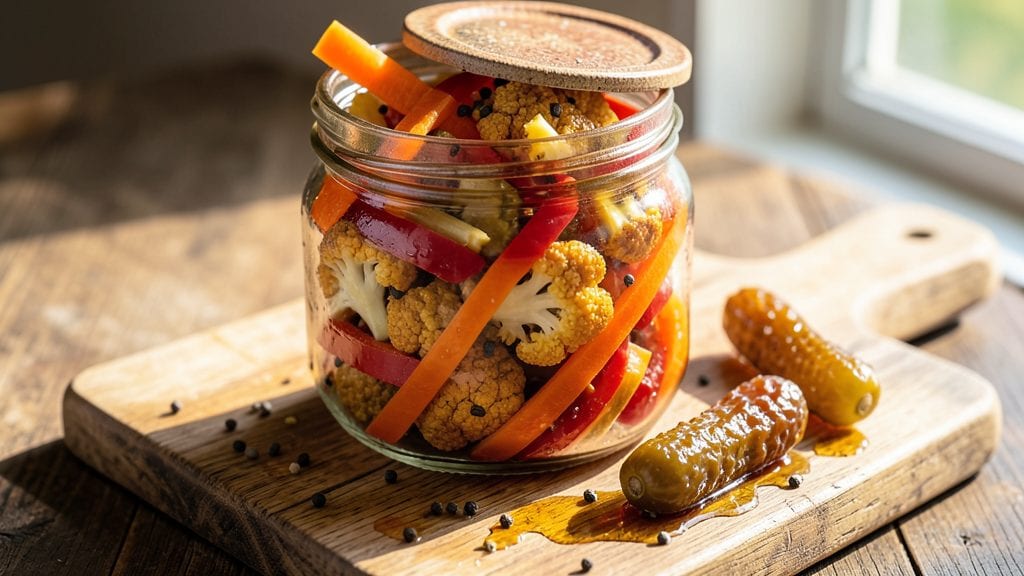
Mastering mixed pickles transforms simple vegetables into crunchy, vinegar-bright bites that add brightness to any meal. My grandmother in Sicily taught me this technique decades ago, and it’s become a staple in my kitchen for quick, flavorful sides. The secret lies in balancing acidity, sweetness, and texture—no fermentation required.
This recipe delivers restaurant-quality pickles in just 10 minutes, using a simple brine of vinegar, sugar, and spices. Unlike traditional lacto-fermented pickles, this method skips the waiting time while still delivering that signature tangy crunch. Perfect for sandwiches, salads, or snacking straight from the jar.
The result is a jar of glossy, crisp vegetables—carrots, cauliflower, and bell peppers—coated in a bright, tangy glaze. The spices infuse quickly, creating layers of flavor without overpowering the natural crunch.
Store them in the fridge for up to two weeks, and you’ll have a pantry staple ready whenever cravings strike.
Whether you’re prepping for a picnic or adding a quick side to dinner, these pickles bring bright, refreshing crunch to every bite. Let’s get started with this foolproof method that works every time.
Ingredients for mixed pickles
Simple vegetables meet bold flavors for restaurant-style pickles in minutes.
| Ingredient | Amount | Notes |
|---|---|---|
| White Vinegar 🍶 | 2 cups | Distilled white preferred |
| Granulated Sugar 🍚 | ½ cup | White or raw preferred |
| Carrots 🥕 | 1 ½ lb | Medium size, cut into sticks |
| Red Bell Pepper 🌶️ | 1 whole | Cut into 1-inch strips |
| Cauliflower 🥬 | 1 lb | Cut into florets |
| Mustard Seeds 🌿 | 1 tbsp | Yellow or brown preferred |
| Black Peppercorns 🌶️ | 1 tsp | Crushed lightly |
| Bay Leaves 🌿 | 2 whole | Fresh preferred |
| Salt 🧂 | 1 ½ tsp | Diamond Crystal preferred |
| Dried Dill 🌿 | 1 tsp | Or 1 tbsp fresh chopped |
| Red Wine Vinegar 🍷 | ½ cup | For depth of flavor |
| Garlic Cloves 🧄 | 3 cloves | Smashed lightly |
The vegetables are the stars here—fresh, crisp, and vibrant. Hit the produce section for carrots with bright orange color (no green tops) and a cauliflower head that's tightly packed. The bell pepper should be firm with no soft spots. I usually grab mine from Whole Foods or my local farmers market—Trader Joe's has great pre-cut options too, but whole is better for texture. Look for carrots that are about the size of your thumb for even cooking. The garlic? Fresh is non-negotiable here—it adds that depth the dried stuff can't match.
No mustard seeds? Dijon mustard at half the amount works in a pinch, though the texture's different. Short on red wine vinegar? Extra white vinegar plus 1 tsp balsamic gets you close. The dill is key—fresh is ideal but dried works too (just use half). Swapping bell peppers? Green or yellow work fine, but red has that classic sweetness. For the sugar, I use raw cane sugar because it dissolves faster, but white works perfectly too. The spices? Toast the mustard seeds in a dry pan for 30 seconds before adding to the brine—this releases their aroma and makes all the difference.
These pickles keep for 2 weeks in the fridge—that's why I always double the batch. Store them in sterilized jars (run through hot water and dry) with the vegetables completely submerged. If any float to the top, weigh them down with a clean plate. They're perfect for picnics, charcuterie boards, or sandwiches. The flavor actually improves after 3-4 days as everything melds together. Freezing isn't recommended—they get mushy, but you can freeze the brine separately for up to 6 months if you're feeling fancy.
Why You'll Love This Recipe
- No Chopping Struggle: I swear, the veggies here are ridiculously forgiving—thick slices or rough chunks work just fine. Between us, I’ve used a butter knife and a mandoline, and both came out crispy perfection.
- Sweet-Tangy Magic: That balance of vinegar and sugar? It’s like a flavor hug for your taste buds. The bell pepper adds a bright pop, while the cauliflower gives a satisfying crunch that disappears the second you take a bite.
- Meal Prep MVP: Honestly, these keep for weeks in the fridge, so I make a big batch and toss them into sandwiches, salads, or even charcuterie boards. The sugar keeps them from getting limp, so they’re always ready to shine.
- Budget Crunch-Saver: Carrots and cauliflower stretch my grocery budget, and vinegar is dirt cheap. I’ve fed a crowd of six with one jar—no fancy ingredients, just bold flavor that won’t break the bank.
Instructions for crunchy vinegar-bright mixed pickles
Here's how to make vibrant, crisp mixed pickles that stay crunchy for weeks.
Prep and Sterilize Your Vegetables
Start by thoroughly washing all vegetables under cold running water. For the 1.5 lb carrots, peel them if desired, then cut into 2-inch sticks—this size ensures even pickling and maximum crunch. Trim the stem and leaves from the 1 whole red bell pepper and slice it into 1-inch strips. Break the 1 lb cauliflower into florets, keeping them about the same size as the carrots for uniform pickling.
Place all prepared vegetables in a large bowl. In a separate bowl, combine 2 cups white vinegar, 0.5 cup granulated sugar, 0.5 cup red wine vinegar, 1.5 tsp salt, 1 tsp dried dill, 1 tbsp mustard seeds, 1 tsp crushed black peppercorns, 3 smashed garlic cloves, and 2 whole bay leaves. This brine mixture is the flavor foundation—don't skip the sugar, as it helps preserve the crunch while balancing the acidity.
Combine and Pack the Vegetables
Pour the warm vinegar mixture over the vegetables in the bowl and stir gently to ensure everything is coated. Let them soak for 10 minutes while you prepare your sterilization equipment. This brief soak helps the flavors begin to meld before the final sealing.
Transfer the vegetable mixture to a clean, quart-sized mason jar or airtight container, packing them tightly but not forcefully. Leave about 1 inch of headspace at the top—this prevents overflow during the sealing process. Use a wooden spoon or clean chopsticks to press down gently, ensuring the vegetables are submerged in the liquid and not floating.
Seal and Rest for Maximum Crunch
Once packed, seal the jar tightly with a lid. Place it in the refrigerator and let it rest for at least 24 hours before consuming. This resting period allows the flavors to fully develop and the vegetables to absorb the brine, resulting in that signature tangy crunch. The longer they sit—up to 2 weeks—the more pronounced the flavors become, though they'll stay crisp for about 3 weeks if stored properly.
For best results, avoid opening the jar frequently during the first few days. Each time you open it, you release moisture and potentially introduce bacteria. Once opened, store in the fridge and consume within 1 week for optimal texture and flavor. These pickles work perfectly as a snack, sandwich topper, or tangy addition to charcuterie boards.
Pro Tips For Making Mixed Pickles
- Boil Vegetables First: I learned this the hard way—tossing raw cauliflower and carrots straight into the vinegar mix leaves them undercooked and mushy. Instead, blanch the cauliflower in boiling water for 3 minutes, then shock in ice water. Carrots and bell peppers should hit 180°F (93°C) internal temp—use a thermometer if you’re unsure. This guarantees crisp-tender texture instead of sad, limp veggies.
- Use Hot Vinegar: Cold vinegar just won’t cut it. Heat your vinegar and sugar mixture until it’s steaming (about 180°F/82°C)—this dissolves the sugar faster and ensures even flavor distribution. Pour it hot over the blanched veggies, then let the jar cool naturally. Skipping this step means flavor and texture develop unevenly, and your pickles will taste like they’re still fighting for their lives.
- Cut Cauliflower Small: Big cauliflower florets stay crunchy on the outside but turn to mush in the center. Break them into 1-inch pieces (yes, even the tough stems—peel and dice them too). Smaller pieces cook faster and absorb the brine evenly. I used to leave them whole, and half the jar would be overdone while the other half was raw. Not worth the effort.
- Add Mustard Seeds Early: Toss in mustard seeds (and any other spices) while the vinegar is still hot—this unlocks their flavor instead of letting them sit dormant. Stir them in for 30 seconds, then remove from heat immediately. This prevents bitterness and makes the pickles taste like they’ve been marinating for weeks, not hours. (Your future self will notice the difference.)
Regional styles of this dish
Southern U.S. Sweet & Spicy
In the American South, mixed pickles take on a sweeter, spicier profile inspired by classic Southern barbecue sides. I remember my Nonna adding 1 tbsp honey and ½ tsp cayenne pepper to the brine for a balance of heat and sweetness that pairs perfectly with pulled pork.
The key here is using apple cider vinegar instead of white vinegar—it adds a fruity depth that complements the Southern love of molasses and brown sugar. For extra crunch, Southern cooks often include green tomatoes cut into thick slices alongside the traditional vegetables. 🌶️
German Sauerkraut-Inspired
German immigrants brought their love of fermented vegetables to America, and their approach to mixed pickles reflects that tradition. For a German-style twist, replace the vinegar with a lacto-fermented brine (3% saltwater solution) and add 1 tbsp caraway seeds and ½ cup apple slices to the jar.
The fermentation process takes 3-5 days in a cool place, but the result is a probiotic-rich pickle with a tangy, slightly sour flavor. I like to serve these with sausages or pretzels for a hearty snack. The texture is softer than vinegar pickles but packed with gut-friendly benefits. 🥬
Italian-Inspired "Sottaceti"
My Nonna’s Italian roots influenced her mixed pickles, which she called sottaceti—a term for vinegar-preserved vegetables. She used red wine vinegar exclusively, along with 1 tsp fennel seeds, 1 tsp red pepper flakes, and a pinch of oregano.
The vegetables were always smaller and more uniform, almost like tiny spears. I still make this version today, especially for antipasto platters. The fennel seeds add an anise-like note that pairs beautifully with prosciutto or mozzarella.
The pickles keep for up to 3 weeks in the fridge, and the flavor deepens over time. 🍷
Scandinavian Mustard Seed Crunch
In Scandinavian countries, mixed pickles often feature whole mustard seeds as a key crunch element. For this variation, I use Swedish mustard seeds (larger and coarser than American varieties) and add 1 tbsp whole allspice berries to the brine.
The vinegar is replaced with white wine vinegar for a cleaner, more elegant flavor. These pickles are perfect with smoked fish or open-faced sandwiches. The mustard seeds add a textural contrast that’s both satisfying and unexpected. I like to serve them chilled, straight from the jar. 🌟
Mediterranean Herb Bright
Drawing from Mediterranean flavors, this version swaps traditional spices for fresh herbs like rosemary, thyme, and oregano. The brine includes 1 tbsp lemon zest and 2 tbsp capers for a briny kick. I often use zucchini and asparagus alongside the classic vegetables for a lighter, summery feel.
This style pairs exceptionally well with grilled meats or seafood. The herbs infuse beautifully into the vinegar, creating a fragrant, herbaceous pickle that’s perfect for summer picnics. 🌿
Asian-Inspired Ginger-Lime
For a fusion twist, I blend Asian flavors with classic pickling techniques. The brine includes 2 tbsp rice vinegar, 1 tbsp fresh ginger, 1 tbsp lime zest, and 1 tsp sesame seeds. The vegetables are thinnerly sliced for quick absorption of the bold flavors.
This version is a hit with sushi rolls or pho—the ginger and lime add a refreshing contrast to rich dishes. The sesame seeds provide a nutty crunch that elevates every bite. Store these pickles for up to 10 days in the fridge to preserve their vibrant flavors. 🍋
Nutrition facts
Frequently asked questions
Can I use this recipe with other vegetables?
This method works beautifully with cucumbers, radishes, fennel, or green beans. For best results, stick to firm vegetables that hold their shape—avoid leafy greens or overly soft veggies like tomatoes. If using cucumbers, slice them ¼-inch thick for even pickling. The key is maintaining similar sizes for uniform texture.
Why do my pickles turn soft instead of staying crisp?
Overly soft pickles usually mean one of two things: the vegetables weren't submerged properly in the brine, or they soaked too long. Always ensure veggies are fully covered by liquid. For extra crunch, add 1 tsp baking soda to the brine (stir well before using)—it helps maintain firmness. Also, store them in the fridge and eat within 2 weeks for peak texture.
How do I adjust the spice level for kids?
Skip the black peppercorns and cayenne entirely, and reduce the mustard seeds to ½ teaspoon. For extra sweetness, increase the sugar to ⅔ cup while keeping the vinegar at 2 cups. Kids love the bright flavor without the heat! You can also add ½ cup raisins for a fun, sweet-sour twist they'll adore.
Can I make these pickles without vinegar?
Yes, but the flavor will differ significantly. For a lacto-fermented version, dissolve 1.5 tablespoons salt in 2 cups filtered water, then pack vegetables tightly in a jar. Weigh them down with a clean plate and leave at room temperature for 3-5 days. This creates probiotic-rich pickles with a tangy, sour flavor—but they'll be softer than vinegar pickles. Always use a fermentation kit for safety.
What's the best way to reheat or use up leftover brine?
Leftover brine is perfect for marinades, salad dressings, or even cocktails! Strain out any spices, then reduce it on the stove to a syrupy consistency for dressings. For cocktails, mix 2 tablespoons brine with 4 oz gin or vodka and top with soda water. Never reheat the brine with vegetables—it can make them mushy. Store leftover brine in the fridge for up to 6 months in an airtight container.