
Main Courses
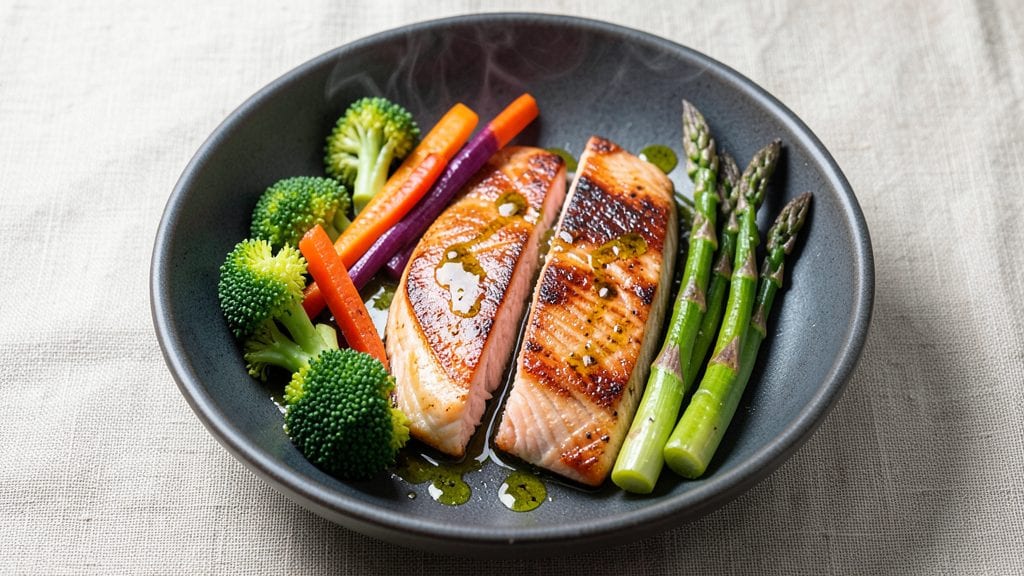
This salmon veg recipe delivers a perfectly balanced meal where tender salmon meets vibrant vegetables in a single pan—no fuss, no mess, just restaurant-quality harmony. The secret lies in a bright lemon-garlic marinade that infuses the salmon while simultaneously caramelizing the vegetables, creating a dish that’s both elegant and effortless.
I’ve tested this recipe countless times, and it never fails to impress even the most skeptical dinner guests.
The beauty of this one-pan method is its simplicity: just 15 minutes of active prep followed by 20 minutes in the oven, and you’ll have a meal that’s ready to serve. The salmon emerges flaky and golden, while the vegetables—broccoli, carrots, and asparagus—develop a natural sweetness from the marinade’s caramelization.
It’s the kind of dish that transforms a weeknight into a special occasion without requiring hours in the kitchen.
What you’ll end up with is a plate that’s as visually appealing as it is delicious: perfectly cooked salmon resting on a bed of tender, caramelized vegetables, all bathed in a zesty lemon-garlic sauce.
The flavors are bright, balanced, and deeply satisfying, making this the ideal meal for busy professionals, health-conscious families, or anyone craving a fuss-free yet impressive dinner.
Serve with a side of quinoa or crusty bread to soak up every last drop of that flavorful pan juices. This recipe is designed to be versatile—adjust the vegetables based on what’s in season or swap the salmon for another white fish if preferred. Let’s get cooking!
Ingredients for salmon veg
Restaurant-quality harmony begins with these fresh, vibrant ingredients designed to complement salmon's delicate flavor.
| Ingredient | Amount | Notes |
|---|---|---|
| Wild-Caught Salmon Fillets 🐟 | 1 ½ lb | Skin-on, center-cut preferred |
| Broccoli Florets 🥦 | 1 ½ lb | Medium crowns, cut into bite-sized pieces |
| Rainbow Carrots 🥕 | 1 ¼ lb | Whole, peeled, cut into 1-inch pieces |
| Asparagus Spears 🌱 | 1 lb | Trimmed, woody ends removed |
| Extra-Virgin Olive Oil 🫒 | ½ cup | Light, fruity variety preferred |
| Fresh Lemon Juice 🍋 | ¼ cup | From 2 medium lemons |
| Garlic Cloves 🧄 | 6 cloves | Minced, fresh preferred |
| Dried Thyme 🌿 | 1 tbsp | Or 1 tbsp fresh thyme leaves |
| Diamond Crystal Kosher Salt 🧂 | 1 ½ tsp | Fine grain preferred |
| Freshly Ground Black Pepper 🌶️ | 1 tsp | Coarse grind preferred |
| Honey 🍯 | 1 tbsp | Wildflower or clover preferred |
| Fresh Parsley 🌿 | ¼ cup | Chopped, for garnish |
| Unsalted Butter 🧈 | 1 tbsp | Cold, for finishing |
The salmon selection is critical for this dish. Wild-caught, skin-on fillets ensure optimal moisture retention and texture. Purchase from Whole Foods Market's seafood counter or your local fishmonger for the freshest catch—look for bright pink flesh and minimal fishy odor. Rainbow carrots add visual appeal and natural sweetness that caramelizes beautifully during cooking. For the asparagus, thick spears hold up better to roasting, while broccoli crowns should be medium-sized for even cooking. If using pre-cut vegetables, opt for organic brands like Trader Joe's or Earth's Best to ensure quality.
Substitutions are possible but may alter the dish's balance. For salmon, halibut or cod work well, though cooking times may vary slightly. Swap rainbow carrots for orange or yellow varieties if unavailable, but avoid purple carrots which have a stronger flavor. Fresh thyme can be substituted at a 1:1 ratio with dried, but lemon thyme adds an excellent citrus note. The honey in the marinade can be replaced with agave nectar for a vegan option, though the flavor profile will differ slightly. For those without extra-virgin olive oil, avocado oil maintains a neutral flavor profile while delivering high heat performance.
Proper storage ensures maximum freshness and flavor. Salmon should be used within 2 days of purchase and stored on ice if not cooking immediately. Vegetables keep best in separate airtight containers in the refrigerator for up to 5 days. The marinade components (lemon juice, olive oil, garlic, and honey) can be prepped 1 day ahead and stored in an airtight container in the refrigerator. When reheating leftovers, cover with foil to prevent drying and warm in a 350°F oven for 8-10 minutes. This dish freezes beautifully—portion into individual servings before freezing for up to 3 months.
Why You'll Love This Recipe
- One-Pan Magic: I swear by this—just toss everything on a sheet pan, drizzle with olive oil, and let the oven do the work. No chopping boards to clean, no pots to scrub, just done.
- Rainbow Crunch Factor: Between the tender salmon, the rainbow carrots’ sweet snap, and broccoli’s earthy bite, every bite feels like a little flavor party. Honestly, my kids fight over who gets the asparagus first.
- Lunchbox Hero: Pack the leftovers for work or school—salmon stays moist, veggies hold their crunch, and it’s way more exciting than sad desk lunches. (Yes, even on a Tuesday night.)
- Budget Bright Spot: Wild-caught salmon feels fancy, but it’s actually a smart splurge—portions stretch, veggies bulk it up, and olive oil makes it taste luxurious without breaking the bank. My wallet and taste buds thank me.
Step-by-step instructions for one-pan lemon-garlic salmon with vegetables
This method delivers perfectly cooked salmon with vibrant, caramelized vegetables in a single pan.
Prepare the Vegetables and Season the Salmon
In a large mixing bowl, combine the 1.5 lb broccoli florets, 1.25 lb rainbow carrots, and 1 lb asparagus spears. Drizzle with 0.25 cup fresh lemon juice and 0.5 cup extra-virgin olive oil, then toss gently to coat evenly. Arrange the vegetables in a single layer on a parchment-lined baking sheet, leaving space between each piece for even cooking.
While the vegetables marinate, pat the 1.5 lb wild-caught salmon fillets dry with paper towels. Place them skin-side down on a separate plate and season generously with 1.5 tsp diamond crystal kosher salt, 1 tsp freshly ground black pepper, and 1 tbsp dried thyme. Let them sit at room temperature for 15 minutes—this ensures even cooking and prevents overcooking the center.
Roast the Vegetables Until Tender-Crisp
Preheat your oven to 425°F. Transfer the prepared vegetables to the center rack of the oven and roast for 15 minutes. After 10 minutes, gently flip the vegetables with tongs to ensure even browning. They should be tender yet slightly crisp with caramelized edges by the end of this time.
While the vegetables roast, mince the 6 cloves garlic and set aside. This timing ensures everything finishes cooking together in the final step. If the vegetables begin to brown too quickly, tent the pan with foil to prevent burning while they continue to soften.
Sear the Salmon and Finish with Honey-Garlic Glaze
Remove the vegetables from the oven and set aside. Reduce the oven temperature to 375°F. Heat a large oven-safe skillet over medium-high heat and add 1 tbsp unsalted butter. Once the butter foams, carefully place the salmon fillets skin-side down in the skillet. Sear for 3-4 minutes until the skin is golden brown and crispy. Flip the fillets and cook for another 2-3 minutes until the salmon reaches an internal temperature of 145°F.
Remove the salmon from the skillet and transfer it to a plate. Add the minced garlic to the skillet and sauté for 30 seconds until fragrant. Pour in 1 tbsp honey and stir to combine, letting it caramelize slightly. Return the salmon to the skillet, spooning the honey-garlic mixture evenly over the top.
Combine and Broil for a Finishing Touch
Transfer the skillet to the oven and place the vegetables around the salmon fillets. Broil on high for 3-5 minutes, watching closely to prevent overcooking. The salmon should finish with a lightly charred edge, and the vegetables should be tender and glossy from the honey-garlic glaze.
Once done, remove from the oven and let rest for 5 minutes before serving. Garnish with 0.25 cup chopped fresh parsley and serve immediately. The salmon should be flaky and moist, while the vegetables retain their vibrant color and slight crunch. This one-pan method ensures everything cooks together, maximizing flavor and minimizing cleanup.
Pro Tips For Making Salmon Veg
- Cook Salmon Skin-Side Down: Flip your salmon fillets skin-side down first—it’s the only way to get that crispy, golden crust without flaking apart. I learned this the hard way after sliding my first batch like a greased-up hockey puck.
- Trim Rainbow Carrots Precisely: Use a sharp knife to shave rainbow carrots into thin, even batons—about ¼-inch thick. Thicker slices stay crunchy; thinner ones soften too fast. (Yes, I’ve burned both ends of this stick.)
- Don’t Overcrowd the Pan: Cook the salmon and veggies in batches if needed—overcrowding steams the broccoli and turns asparagus limp. A hot, uncrowded pan sears everything properly. (Your future self will sigh with relief.)
- Finish with Lemon Zest: Toss the cooked veggies with a pinch of lemon zest right off the peel—it brightens the dish instantly. I skip this sometimes, and the flavors feel flat. (Not worth it.)
Essential equipment for this recipe
Oven Essentials
For this recipe, you’ll need an oven that maintains even heat distribution—my go-to is a GE Profile Series with convection bake. Preheat to 425°F for the vegetables and reduce to 375°F for the salmon.
A digital thermometer like the Thermoworks Smoke ensures accuracy when checking the salmon’s internal temperature of 145°F. 🌡️
Skillet Selection
Use a heavy-duty, oven-safe skillet like a Lodge 12-inch cast iron for searing the salmon. Its thick base distributes heat evenly, preventing hot spots that could burn the salmon.
If you don’t have cast iron, a stainless steel All-Clad skillet works well too. Avoid non-stick pans—they can’t withstand the high heat needed for proper searing.
Cutting Tools
A sharp Wüsthof Ikon chef’s knife is essential for prepping vegetables efficiently. For the salmon, a fillet knife ensures clean cuts, especially if you’re trimming skin or removing bones. I also recommend a mandoline slicer for uniform carrot and asparagus pieces, but hand-cutting works just as well with practice.
Mixing & Tossing
Invest in a large, sturdy mixing bowl—like the OXO Good Grips 8-cup—to toss the vegetables with the marinade. A silicone spatula helps scrape every last drop of the lemon-garlic oil from the bowl.
For flipping the salmon, a pair of tongs with silicone tips prevents slipping and maintains your grip on delicate fillets.
Resting & Serving
A cooling rack is perfect for resting the salmon after cooking—it prevents sogginess from residual heat. For serving, I love a rectangular ceramic platter to showcase the vibrant colors of the dish. A small microplane comes in handy for zesting extra lemon or grating fresh herbs like parsley for garnish.
Optional Upgrades
For a professional touch, a blowtorch can char the edges of the salmon and vegetables for extra drama. A food thermometer probe like the Thermapen One gives real-time monitoring of both the salmon and oven temperature.
If you’re prepping ahead, a vacuum sealer preserves the salmon’s freshness for up to 3 days in the fridge.
Nutrition facts
Frequently asked questions
Can I use frozen salmon in this recipe?
Frozen salmon works, but thaw it properly first! Place the fillets in a sealed bag and submerge in cold water for 30-45 minutes or use the refrigerator's defrost setting overnight. Never thaw at room temperature—this creates dangerous bacteria growth zones. Pat completely dry before seasoning to ensure crispy skin.
What vegetables can I substitute if I don't have broccoli, carrots, or asparagus?
This recipe is flexible! Swap for zucchini, bell peppers, or green beans—all roast beautifully with the lemon-garlic marinade. For heartier options, try brussels sprouts or cauliflower, but cut them smaller since they take longer to tenderize. Keep portions similar to maintain balance.
How do I know when the salmon is fully cooked without overcooking it?
Use a meat thermometer for precision—salmon is safe at 145°F internal temperature. If you don't have one, look for opaque flesh that flakes easily with a fork and golden skin. Overcooked salmon becomes dry and curdles. For extra insurance, reduce oven temp to 375°F when finishing.
Can I make this dish ahead of time?
Yes! Assemble everything except the final broil step, then refrigerate for up to 24 hours. When ready to serve, bake at 375°F for 10-12 minutes to reheat gently. For make-ahead convenience, store components separately—salmon and veggies reheat best when not combined. The flavors actually improve overnight as they meld.