
Snacks
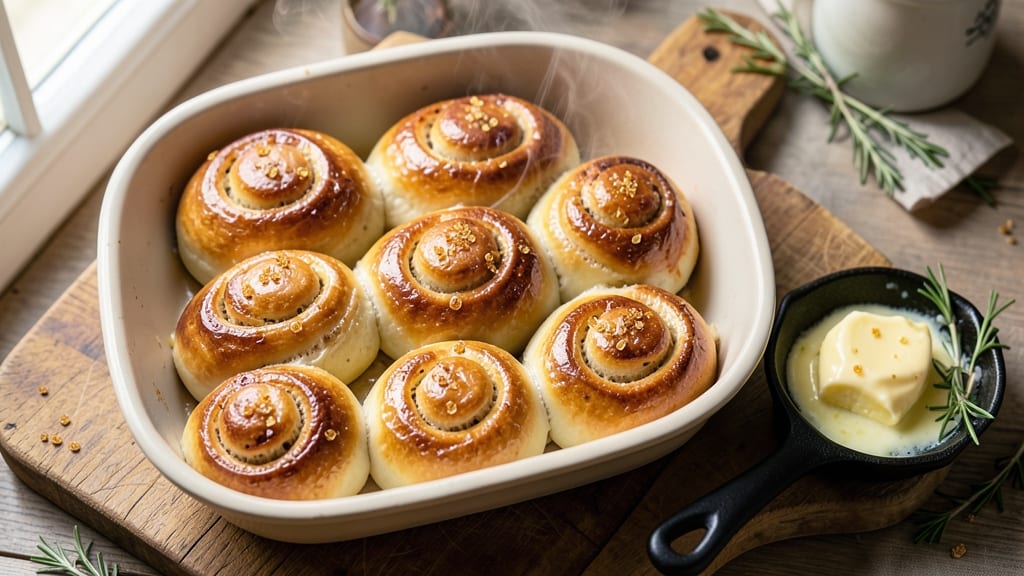
Sister Schubert's yeast rolls recipe delivers flaky, buttery layers that make every bite worth the effort. These iconic rolls feature a signature swirl of rich dough that creates a tender, airy interior with a crisp, golden crust—perfect for sandwiches, dinner rolls, or serving alongside holiday meals.
I first discovered this recipe while searching for the perfect yeast roll, and the buttery swirl technique changed everything.
The secret to achieving those flaky layers lies in precise dough handling and proper proofing times. You'll work with a slightly enriched dough that incorporates cold butter, which creates steam during baking for that signature texture.
The shaping technique—rolling and swirling the dough—is what gives these rolls their distinctive appearance and mouthfeel, making them stand out from basic dinner rolls.
By the time these rolls emerge from the oven, you'll have golden, flaky rolls with a tender crumb and buttery aroma that fills your kitchen. The dough's gentle sweetness balances the richness of the butter, creating a versatile roll that works for any meal.
Whether you're serving them warm with honey butter or using them as sandwich rolls, they'll become a staple in your household.
These rolls require patience—especially during the proofing stages—but the results are well worth it. With just a few simple ingredients and careful technique, you'll master the art of making flaky, restaurant-quality yeast rolls at home. Let's get started on creating these buttery swirls that everyone will love.
Ingredients for sister schubert yeast rolls
Simple pantry staples transform into golden, flaky rolls with a buttery swirl at their heart.
| Ingredient | Amount | Notes |
|---|---|---|
| All-Purpose Flour 🌾 | 5 cups | Sifted for light texture |
| Unsalted Butter 🧈 | 1 cup | Cold, cubed for flakiness |
| Granulated Sugar 🍚 | ¼ cup | Light brown preferred |
| Active Dry Yeast 🍞 | 2 ¼ tsp | Freshly opened packet |
| Warm Whole Milk 🥛 | 1 ¼ cups | 110°F, not hot |
| Large Eggs 🥚 | 1 whole | Room temperature |
| Salt 🧂 | 1 tsp | Kosher or sea salt |
| Granulated Sugar 🍚 | ¼ cup | For dough sweetness |
| Unsalted Butter 🧈 | ¼ cup | Cold, for swirl |
| Large Egg Yolk 🥚 | 1 whole | For egg wash |
| Milk 🥛 | 1 tbsp | For egg wash |
| Coarse Sugar 🍚 | ¼ cup | For topping (optional) |
The butter is non-negotiable for those signature flaky layers. European-style butter like Plugrá or Land O'Lakes works best—it has more fat content. Grab the coldest butter from the fridge and cube it into even-sized pieces. The flour? King Arthur or Gold Medal are my go-tos—they handle the dough's moisture better than store-brand stuff. If your yeast packet says 'rapid-rise,' use half the amount. And that warm milk? 110°F is perfect—too hot and you kill the yeast, too cold and it won't activate. Test with your pinky—should feel like bathwater.
No cold butter? Chill your butter for 20 minutes before cubing. Substituting margarine? Skip it—it won't give you that buttery flavor or flaky texture. Running low on sugar? Honey or maple syrup at half the amount works, but the dough might be slightly denser. The egg wash is where the magic happens—add a pinch of salt to it for extra flavor. For the swirl, don't overwork the dough after adding the butter or you'll end up with tough rolls. And that coarse sugar topping? Skip it if you're watching sugar, but it adds a nice crunch that pairs perfectly with honey butter.
These rolls keep beautifully—3 days at room temperature wrapped in a clean kitchen towel, or 1 week refrigerated in an airtight container. For freezing, bake them first, then store in a ziplock bag. Reheat at 350°F for 5-10 minutes until warm. I always make a double batch—half go in the freezer so I've always got fresh rolls on hand. The dough can also be refrigerated overnight (covered) for easier morning baking—just let it come to room temp before shaping.
Why You'll Love This Recipe
- Butter-Pillow Soft: The warm milk and melted butter create this unreal tender crumb—like biting into a cloud. Honestly, I’ve made rolls that were tough or dry, but these? They’ll make you forget store-bought ever existed.
- Sweet Without Overdoing: Just a touch of sugar in the dough and a hint of vanilla (if you add it) gives them a subtle sweetness that pairs perfectly with savory meals. No one will guess they’re not all about sugar—trust me, my picky husband included.
- Weeknight Workhorse: These rolls rise while you prep dinner, so you’re not stuck babysitting yeast. Toss a batch in the fridge for breakfast the next morning—warm them up, slather with butter, and boom, instant crowd-pleaser.
- Budget Magic: Five ingredients, all pantry staples, and they stretch to feed four for under $3. I’ve made these for holiday dinners, potlucks, and lazy Sundays—no fancy ingredients, just pure, reliable comfort.
Step-by-step instructions for Sister Schubert yeast rolls
Here's how to create those legendary flaky layers and buttery swirls that make these rolls legendary.
Activate the Yeast and Mix the Dough
In a large mixing bowl, combine the 1.25 cups warm whole milk with the 2.25 teaspoons active dry yeast and 0.25 cup granulated sugar. Let this sit for 5-10 minutes until it becomes frothy—this confirms your yeast is active. If it doesn't bubble, start over with fresh yeast.
In a separate bowl, whisk together the 5 cups all-purpose flour and 1 teaspoon salt. Make a well in the center and pour in the yeast mixture along with the 1 whole large egg. Mix with a wooden spoon until a shaggy dough forms, then turn it out onto a lightly floured surface. Knead for 8-10 minutes until smooth and elastic, adding a little more flour if needed to prevent sticking.
Incorporate the Butter and First Rise
Shape the dough into a rectangle about 12x10 inches on a floured surface. Cut the 1 cup unsalted butter into small cubes and arrange them evenly over the dough, leaving a 1-inch border around the edges. Fold the dough over the butter like a letter, sealing the edges tightly. This creates those signature flaky layers.
Shape the dough into a log and place it in a greased bowl. Cover with a damp towel and let it rise in a warm place for 1-1.5 hours, or until doubled in size. The dough should spring back slowly when poked—this means it's ready for shaping. If it rises too quickly, your kitchen might be too warm; adjust accordingly.
Shape and Add the Swirl
Punch down the risen dough and divide it into 12 equal pieces. Roll each piece into a 12-inch rope and pinch the seams to seal. Arrange the ropes side by side in a greased 9x13-inch baking pan. This creates the classic row formation.
In a small bowl, mix the 0.25 cup granulated sugar with the 0.25 cup unsalted butter until crumbly. Sprinkle this mixture evenly over the dough ropes. Using a sharp knife, make a 1-inch deep cut down the center of each rope, then gently press the cut edges apart to create a swirl. This is where the magic happens—those buttery swirls become golden and irresistible.
Second Rise and Bake to Golden Perfection
Cover the pan with a damp towel and let the rolls rise for another 45-60 minutes until they've puffed up and nearly touch each other. Preheat your oven to 375°F while they rise—this ensures they go straight into a hot oven for even baking.
In a small bowl, whisk together the 1 whole large egg yolk and 1 tablespoon milk to make an egg wash. Brush this generously over the tops of the rolls, then sprinkle with 0.25 cup coarse sugar for that classic crunchy topping. Bake for 20-25 minutes until the rolls are deep golden brown and the sugar topping is caramelized. The rolls should sound hollow when tapped on the bottom.
Rest and Serve Warm
Remove the rolls from the oven and let them cool in the pan for 5 minutes. This resting period helps them set and prevents them from falling apart when you transfer them. Serve warm, straight from the pan, for the ultimate buttery, flaky experience.
Here's the thing—these rolls taste even better the next day, so if you can resist, let them cool completely and store them in an airtight container. Reheat in a 350°F oven for 10 minutes to restore that warm, gooey goodness. The flaky layers and buttery swirls are what make these rolls legendary, so don't rush any of the steps—especially the rising and butter incorporation.
Pro Tips For Making Sister Schubert Yeast Rolls
- Test Your Yeast First: Skip this step and you’re gambling—especially with Sister Schubert’s rolls. Mix 1 packet of yeast with ¼ cup warm milk (110°F) and 1 tsp sugar, then wait 5–10 minutes for frothy action. If nothing happens, your dough will never rise, and you’ll be scrambling to blame the recipe instead of the yeast. Trust me, 5 minutes now saves hours of frustration later.
- Soften Butter Properly: The rolls’ signature flakiness hinges on cold butter staying in chunks, not melting into grease. Cut the butter into ½-inch cubes and let it sit at room temperature for exactly 30–45 minutes—long enough to soften but not drip. I used to eyeball it and ended up with dense, greasy rolls. A timer fixes that.
- Don’t Overwork the Dough: Once you knead in the butter, stop when the dough is just smooth and slightly tacky—it’ll feel like it needs more, but resist. Overmixing develops gluten, and those rolls turn into chewy hockey pucks instead of tender, melt-in-your-mouth pillows. My grandmother called it “the Goldilocks rule”: not too tough, not too soft.
- Proof in a Warm Spot: Your oven’s light-on setting is your friend here—turn it on with a cup of water inside to create a humidity chamber. Place your shaped rolls in a greased bowl, cover with a damp towel, and let them rise until they’ve nearly doubled. I learned this the hard way after leaving mine on the counter where drafts flattened them like sad pancakes. Warmth and moisture are non-negotiable.
Creative variations of these flavors
Sweet Cinnamon Twist
Infuse your rolls with warmth by adding 1 teaspoon ground cinnamon and ½ teaspoon vanilla extract to the dough during mixing. This creates a subtle spiced flavor that pairs perfectly with honey butter or jam.
For extra richness, replace 2 tablespoons of the butter in the swirl mixture with 2 tablespoons brown sugar—this adds caramelized depth to every bite. 🌟
Herb-Infused Variations
Brighten the flavor profile with fresh herbs like rosemary or thyme. Finely chop 1 tablespoon fresh rosemary and mix it into the dough before the first rise, or sprinkle 2 teaspoons dried thyme over the egg wash before baking.
These herbs complement savory fillings like roasted garlic or prosciutto beautifully.
Cheesy Swirl Option
For a savory twist, replace 2 tablespoons of the sugar in the swirl mixture with 2 tablespoons grated Parmesan cheese. This adds a nutty, umami depth that works wonderfully with tomato-based sauces or as a side for soups. Use Parmigiano-Reggiano for the best flavor—it melts beautifully during baking.
Jalapeño Popper Rolls
Spice lovers, try this kick! Mix 1-2 finely chopped jalapeños (seeds removed for mild heat) and 1 tablespoon cream cheese into the swirl butter mixture. The cream cheese softens the heat while adding a creamy contrast. Top with extra coarse sugar to balance the spice—trust me, it’s a crowd-pleaser. 🌶️
Mini Biscuit-Style Rolls
Shape the dough into 24 mini rolls instead of 12 for bite-sized appetizers. Use a mini muffin tin lined with parchment cups to create uniform, adorable rolls perfect for parties.
Reduce the swirl butter mixture to ¼ cup total and bake at 375°F for 12-15 minutes—they’ll be golden and flaky in no time.
Gluten-Free Adaptation
For a gluten-free version, replace the all-purpose flour with a 1:1 gluten-free flour blend like King Arthur Measure for Measure. Add 1 teaspoon xanthan gum to improve texture, and use ½ cup almond milk instead of whole milk to keep the dough from becoming too sticky.
The rolls will still be tender but slightly denser—perfect for those with dietary restrictions.
Nutrition facts
Frequently asked questions
Why does the dough need two rising times?
The first rise activates the yeast and helps develop the dough's structure, while the second rise after shaping creates those signature puffy, airy rolls. Skipping either step can result in dense or flat rolls that lack the signature flaky texture. The second rise also allows the butter swirl to meld perfectly into the dough.
Can I make these rolls without a stand mixer?
These rolls are designed for hand-kneading. Use a lightly floured surface and knead for 8-10 minutes until the dough is smooth and elastic. The butter folding technique works best by hand—just be gentle when handling the cold butter to avoid melting it prematurely.
What if my rolls don't rise properly?
If your rolls aren't puffy after rising, check your yeast first—it may be expired. Ensure your milk is 110°F (not hot) and your kitchen is warm (75-80°F works best). For faster rising, place the dough bowl on top of your oven with the light on (not heat). If using rapid-rise yeast, reduce to 1.5 teaspoons instead of 2.25.
How do I store leftover rolls?
Keep them fresh for 3 days at room temperature wrapped in a clean kitchen towel, or refrigerate in an airtight container for up to 1 week. For freezing, bake first, then store in ziplock bags. Reheat at 350°F for 10 minutes until warm—this restores the buttery, flaky texture perfectly.
Can I use this dough for other baked goods?
Yes! This enriched dough works beautifully for biscuits or scones. For biscuits, cut the dough into rounds, fold in more butter, and bake at 400°F for 12-15 minutes. For scones, shape into triangles and add dried fruit or herbs to the dough before baking. The swirl technique adds extra richness to both variations.