Main Courses
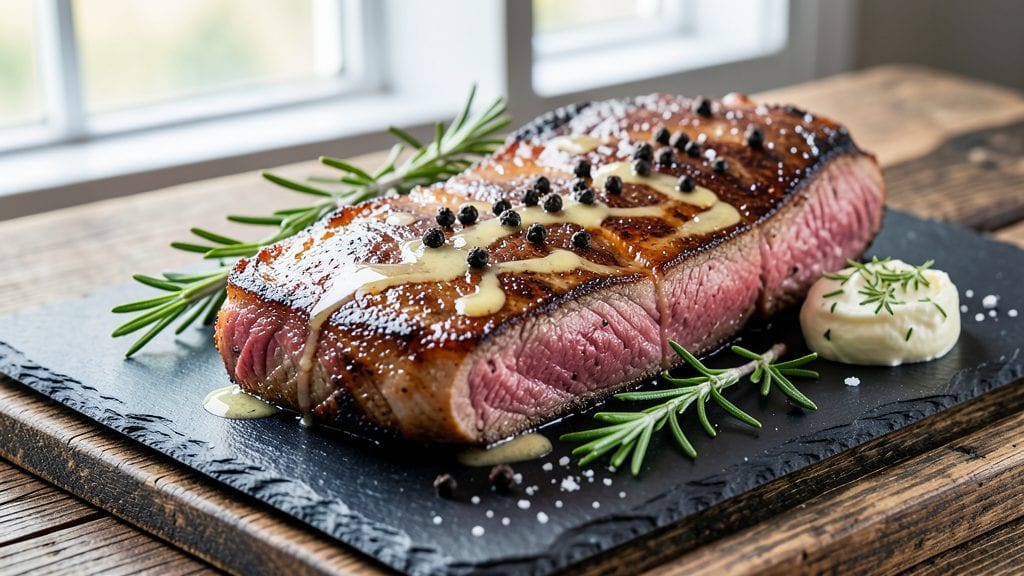
Mastering a whole roasted New York strip loin with that coveted hotel-style crust is simpler than you think—this reverse-sear method guarantees perfect results every time. The secret lies in precise temperature control and a well-timed high-heat sear that transforms tough cuts into melt-in-your-mouth tenderness.
I’ve perfected this technique after years of experimenting, and it’s now my go-to method for hosting dinner parties.
What sets this recipe apart is the two-stage cooking process: first, a slow roast to even out the internal temperature, followed by a quick sear in a screaming-hot pan to create that signature crust. This approach ensures the center remains perfectly medium-rare while the exterior develops a deep, caramelized bark.
The key ingredients are simple—just high-quality beef, kosher salt, black pepper, and butter—but their execution makes all the difference.
By the time you’re done, you’ll have a whole roasted New York strip loin that’s juicy, flavorful, and restaurant-quality, with a crust so impressive your guests will think you’ve been cooking professionally for years. The reverse-sear method eliminates guesswork, making it foolproof for both beginners and seasoned cooks alike.
Serve with classic sides like roasted potatoes, grilled asparagus, or a crisp salad to complete the meal. This recipe is designed to deliver consistent, professional results—no matter your skill level. Let’s get started on creating your next standout centerpiece.
Ingredients for whole roasted new york strip loin
Six simple ingredients, one perfect hotel-style crust—this is your game-changing roast.
| Ingredient | Amount | Notes |
|---|---|---|
| Whole New York Strip Loin 🥩 | 4 lb | Center-cut, 1.5-2 inches thick |
| Kosher Salt 🧂 | 1 ½ tbsp | Diamond Crystal preferred, coarse |
| Freshly Ground Black Pepper 🌶️ | 1 ½ tbsp | Freshly cracked for maximum flavor |
| Unsalted Butter 🧈 | ½ cup | Cold, cut into 1-inch cubes |
| Extra-Virgin Olive Oil 🫒 | 2 tbsp | For searing, high smoke point |
| Fresh Rosemary 🌿 | ¼ cup | Chopped, sprigs for garnish |
| Fresh Thyme 🌿 | ¼ cup | Leaves only, stems removed |
| Garlic Cloves 🧄 | 6 cloves | Smashed, skin-on for aroma |
| Yellow Onion 🧅 | 1 whole | Sliced into 1/4-inch rounds |
The beef is non-negotiable here. Look for a whole New York strip loin with good marbling—the center-cut section is key for even cooking. Costco or Whole Foods carry excellent cuts, but your local butcher will often have better selection. Aim for a roast that's roughly 1.5-2 inches thick—thinner cuts sear faster but risk overcooking the center. If you're buying a whole strip, ask them to trim off any excess fat or silver skin, which can interfere with the crust. The marbling should be white and plentiful, not yellow or sparse. This fat is what renders during cooking, creating that luxurious crust.
No fresh rosemary? Dried works at half the amount, but the flavor won't be the same—trust me, it's worth hunting down. Short on time? Pre-chop the herbs and garlic ahead and store them in a sealed container in the fridge for up to 3 days. The butter must be cold when you sear—take it out of the fridge just before you're ready to cook. As for substitutions, if you can't find Diamond Crystal salt, Morton kosher salt is fine, but taste as you go since brands vary in saltiness. The olive oil? Use something with a high smoke point—avoid delicate infused oils that might burn during the sear.
This roast reheats like a dream—20 minutes at 300°F in its juices keeps it tender. For make-ahead parties, cook it fully, let it rest, then refrigerate for up to 3 days. To serve, slice against the grain and arrange on a platter with the rendered butter and herbs from the pan spooned over the top. The crust alone will have your guests asking for seconds. Store leftovers wrapped tightly in foil for up to 4 days, or freeze portions for 3 months. The butter and herbs keep beautifully in the fridge for a week—just pop them back in the pan when you're ready to reheat.
Why You'll Love This Recipe
- Five-Ingredient Magic: I swear by this—just salt, pepper, butter, olive oil, and that gorgeous strip loin. No fancy marinades or last-minute shopping. Honestly, the simplicity makes it feel like a cheat code for restaurant-quality steak at home.
- Butter-Crusted Bliss: That crispy, golden crust from the butter and olive oil? It’s the kind of texture you’ll want to lick off your fingers. The pepper stays fresh, the salt enhances every bite, and the butter? It’s pure, unfiltered joy.
- Weeknight or Weekend: Throw it in the oven while you prep sides—roasted potatoes, a simple salad, or even just crusty bread. Between us, this is my go-to for date nights and lazy Sundays. No stress, all flavor.
- Leftovers That Don’t Suck: Cold slices the next day? Still rich and satisfying. I’ll slice it thin, toss it in a sandwich, or even cube it for a hearty breakfast scramble. (Yes, even on a Tuesday.) No sad, dry steak here—just adaptable, delicious leftovers.
Instructions for whole roasted New York strip loin: the reverse-sear method
This technique guarantees a perfect crust while keeping the interior tender and juicy.
Prep and Season the Meat
Remove the whole New York strip loin from the refrigerator and let it sit at room temperature for 30 minutes. This ensures even cooking throughout. Pat the surface completely dry with paper towels—moisture is the enemy of that coveted crust.
In a small bowl, combine the 1.5 tablespoons kosher salt and 1.5 tablespoons freshly ground black pepper. Rub this mixture all over the loin, pressing firmly so the seasoning adheres. The salt will begin drawing out moisture, which is why we pat it dry first. Let the seasoned loin rest uncovered on a wire rack for 15 minutes—this final drying step is crucial for that hotel-style crust.
Build the Herb Butter Mixture
While the meat rests, prepare the herb butter by combining the ½ cup cold unsalted butter, chopped ¼ cup fresh rosemary, ¼ cup fresh thyme, and 6 smashed garlic cloves in a small bowl. Use your fingers to work the herbs and garlic into the butter until evenly distributed. The cold butter should remain in large cubes—this prevents it from melting prematurely.
Slice the 1 whole yellow onion into ¼-inch rounds and set aside. These will form a flavorful bed for the roast. I like to keep the onion slices whole rather than chopped to create a more elegant presentation while still infusing maximum flavor.
Low-Temperature Roast to Perfect Doneness
Preheat your oven to 275°F. Place the onion slices in a roasting pan and arrange the seasoned loin on top. Spread the herb butter mixture evenly over the surface of the meat, pressing gently to ensure contact. Place the roasting pan on the middle rack and roast for 1 hour and 15 minutes.
Here's where the magic happens: the low temperature gently cooks the meat to 115°F internal temperature while the butter bastes it continuously. You'll notice the meat will look pale and uncooked—this is normal and exactly what we want. The goal is even doneness without any crust development at this stage. Use a meat thermometer to check the temperature—it's the only reliable way to know when it's ready.
Create the Perfect Crust Through Searing
Remove the roast from the oven and let it rest for 5 minutes. While it rests, heat a heavy skillet over high heat until it's smoking hot. Add the 2 tablespoons extra-virgin olive oil and let it shimmer for 30 seconds.
Place the roast in the hot skillet, fat-side down, and sear for 2 minutes without moving it. You'll hear a satisfying sizzle as the residual moisture evaporates and the butter creates a golden crust. Flip the roast and sear the other side for another 2 minutes. The crust should be deep golden brown with some caramelized spots. If you see any areas that aren't browned, press them gently with a spatula to ensure even contact.
Rest and Slice for Maximum Juiciness
Transfer the seared roast to a cutting board and let it rest for 10 minutes before slicing. This resting period allows the juices to redistribute throughout the meat. The internal temperature should rise to about 125°F during this time.
Slice the roast against the grain into ½-inch thick portions. Each slice should have that perfect combination of tender, pink center and crispy, herb-infused crust. Serve immediately with the pan juices and any remaining herb butter spooned over the top. The onions will have softened slightly during roasting, adding sweetness that complements the rich beef perfectly.
Pro Tips For Making Whole Roasted New York Strip Loin
- Start With Ice-Cold Butter: Pat the strip loin dry, then rub it with a cold stick of unsalted butter—this isn’t just for flavor, it’s for moisture. I used to melt it first, thinking it’d spread better, but cold butter clings like glue and bastes the meat as it roasts, keeping it juicier than a dry sponge.
- Skip the Crowding Pan: Roast the strip loin alone in the pan for the first 10 minutes—no sides, no veggies, nothing. I learned this the hard way after my kitchen filled with smoke because the butter pooled and burned. High heat needs space to work its magic on that crust.
- Wait 5 Minutes Before Carving: Let the meat rest under foil, even if you’re starving. The second I cut into it fresh out of the oven, the juices rush out like a broken dam. Five minutes is all it takes for those flavors to settle—your knife will thank you later.
- Use Olive Oil First: Warm the pan with olive oil before adding butter—this prevents the butter from burning instantly. I was skeptical until I tried it: the oil creates a stable base, and the butter melts into a rich, golden crust without turning into a sad, greasy mess.
Creative variations of whole roasted new york strip loin
Herb-Infused Coffee Rub
Swap the classic salt-and-pepper seasoning for a bold coffee-rub dry brine that adds depth and complexity. Mix 1 tbsp finely ground coffee (I use Peet’s Major Dickason’s Blend), 1 tbsp smoked paprika, 1 tsp garlic powder, and 1 tsp onion powder with the salt and pepper.
The coffee enhances the beef’s natural richness while adding a subtle earthy note that pairs beautifully with the herb butter. Apply this rub 24 hours before cooking for maximum penetration. 💫
Bourbon-Glazed Crust
After the initial sear, brush the roast with a bourbon reduction glaze for a luxurious finish. Simmer ¼ cup bourbon (like Buffalo Trace), 2 tbsp balsamic vinegar, and 1 tbsp brown sugar in a saucepan until reduced by half.
Once the roast rests, brush this glaze over the top and sear again briefly to caramelize. The bourbon adds a smoky-sweet contrast that elevates the dish to next-level restaurant quality.
Blue Cheese-Stuffed Variations
For a decadent twist, create pockets in the roast by slicing shallow cuts (about ½ inch deep) in a diamond pattern. Stuff these pockets with 1-ounce cubes of blue cheese (like Maytag Blue) before roasting.
The cheese melts slightly, creating pockets of creamy, tangy goodness that cut through the richness. Serve with a drizzle of honey-mustard reduction to balance the bold flavors.
Spicy Chipotle Butter
Amplify the heat by infusing the herb butter with chipotle peppers. Add 1-2 chipotle peppers in adobo sauce (minced) and ½ tsp ground cumin to the butter mixture. The smoky, spicy kick pairs perfectly with the crust and adds a Southwestern flair.
For extra heat, sprinkle crushed red pepper flakes over the seared roast before serving. This variation is a crowd-pleaser for spice lovers. 🌶️
Red Wine Reduction Sauce
Transform the pan juices into a silky red wine reduction to serve alongside the sliced roast. After removing the roast, deglaze the pan with ½ cup dry red wine (like Cabernet Sauvignon) and 2 tbsp beef stock.
Simmer until reduced by half, then whisk in 1 tbsp cold butter for a glossy finish. The wine’s acidity brightens the dish, while the butter adds richness. This sauce is perfect for drizzling over individual slices or serving in a gravy boat.
Nutrition facts
Frequently asked questions
Why does the recipe use a reverse-sear method instead of traditional high-heat roasting?
The reverse-sear method ensures perfect doneness throughout while creating that coveted crust. Low-temperature roasting (275°F) gently cooks the center to 115°F without overcooking, while the final high-heat sear develops a deep, caramelized crust. This technique eliminates guesswork and works especially well for thick cuts like whole New York strip loin.
Can I cook this recipe in an oven that doesn't go below 300°F?
Yes! If your oven's minimum temperature is 300°F, adjust by roasting at 300°F for 1 hour instead of 275°F. Check internal temperature with a meat thermometer—it should reach 115°F before searing. The cooking time may vary slightly, but the reverse-sear principle remains the same.
How do I know when the sear is done properly?
The sear is perfect when the crust is deep golden brown with caramelized spots and the internal temperature reaches 125°F after resting. If areas aren't browned, press them gently with a spatula to ensure even contact. The crust should be crispy but not burnt—this takes about 2 minutes per side in a screaming-hot pan.
What's the best way to reheat leftovers without drying them out?
Reheat sliced leftovers in their juices at 300°F for 20 minutes, covered loosely with foil. For whole roasts, wrap tightly in butcher paper and reheat at 300°F for 30 minutes. Never microwave—it destroys the crust and texture. Add a pat of butter and splash of beef broth to keep it moist.
Can I substitute a different herb blend for the rosemary and thyme?
Try 1 tbsp each of dried oregano and sage or 1 tbsp fresh tarragon for a different flavor profile. For a Mediterranean twist, use 1 tbsp fresh oregano and 1 tsp lemon zest. Just ensure the herbs complement the beef's richness. The key is using ½ cup total fresh herbs (or equivalent dried amounts).