Main Courses
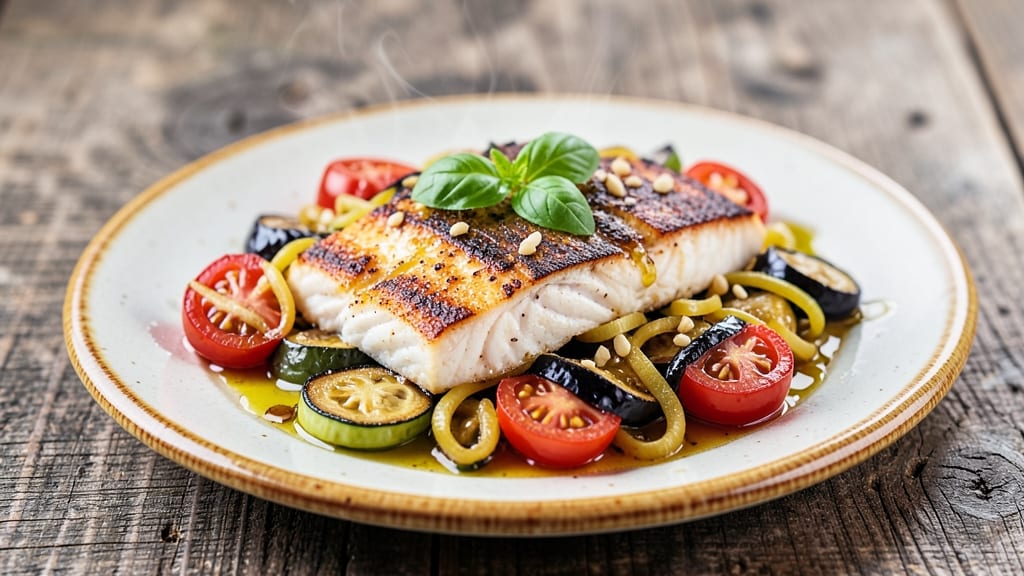
This baked fish with ratatouille recipe transforms a simple weeknight dinner into a restaurant-worthy Mediterranean masterpiece—all in one pan.
The secret lies in balancing tender, flaky fish with the vibrant, herbaceous layers of ratatouille, where eggplant, zucchini, and tomatoes caramelize into sweet, savory perfection while the fish bakes to just the right temperature.
I developed this recipe after years of experimenting with Mediterranean cooking, and it never fails to impress even the most skeptical eaters.
The beauty of this dish is its simplicity: no complicated techniques, just precise timing and layering. You'll start by sautéing the vegetables for the ratatouille until they're tender but still hold their shape, then arrange them around the fish fillet in a single baking dish.
The fish gets a light coating of olive oil, lemon zest, and herbs, ensuring it stays moist while absorbing the flavors of the surrounding ratatouille. Baking everything together lets the aromas meld seamlessly, creating a dish that's both elegant and effortless.
What you'll end up with is a plate that looks as good as it tastes—golden, flaky fish resting on a bed of colorful, caramelized ratatouille, all drizzled with a touch of balsamic glaze for brightness.
The fish reaches an ideal internal temperature of 145°F, ensuring it's cooked perfectly without drying out, while the ratatouille develops deep, complex flavors from the oven's gentle heat.
This is the kind of dish that makes Mediterranean cooking feel accessible, even for those who think it requires hours in the kitchen.
Serve it with a crisp green salad and crusty bread to soak up every last bit of the flavorful juices. The timing is designed so everything comes together at once, making it perfect for a stress-free dinner.
Let's get started—this recipe is about to become your new go-to for effortless, flavorful meals.
Ingredients for baked fish with ratatouille
Mediterranean pantry staples meet flaky fish for a one-pan wonder that's restaurant-worthy but effortless.
| Ingredient | Amount | Notes |
|---|---|---|
| Center-Cut Cod Fillets 🐟 | 2 pieces | 6-8 oz each, skin-on preferred |
| Medium Eggplant 🍆 | 1 whole | Italian or Japanese variety |
| Medium Zucchini 🥒 | 1 whole | Long variety, sliced lengthwise |
| Roma Tomatoes 🍅 | 4 whole | Medium size, halved |
| Yellow Onion 🧅 | 1 whole | Thinly sliced, about 1 cup |
| Garlic Cloves 🧄 | 4 cloves | Minced, not pre-minced jar |
| Extra-Virgin Olive Oil 🫒 | ½ cup | Light fruity variety, not strong |
| Fresh Thyme Leaves 🌿 | ¼ cup | Stems removed, loosely packed |
| Fresh Rosemary Sprigs 🌿 | 2 whole | Needle leaves only, chopped |
| Lemon Zest 🍋 | 1 tbsp | From 1 medium organic lemon |
| Kosher Salt 🧂 | 1 ½ tsp | Diamond Crystal preferred |
| Ground Black Pepper 🌶️ | ½ tsp | Freshly cracked preferred |
| Balsamic Glaze 🍷 | 2 tbsp | Store-bought or reduced balsamic |
| Crusty Baguette 🍞 | 1 whole | For serving, sliced into 1-inch pieces |
| Baby Spinach 🌱 | 2 cups | For side salad, loosely packed |
The fish is non-negotiable here. Center-cut cod stays flaky and never dries out (unlike haddock or tilapia), and the skin adds crispy texture. Trader Joe's and Whole Foods carry the best quality, but any seafood counter will have it. Look for fillets with tight, moist flesh—not dry or discolored. The eggplant and zucchini should be firm with no soft spots (the Italian varieties caramelize better than round types). Fresh herbs are a must—Penzeys or your local market's bulk section has the best thyme and rosemary. For the olive oil, California Olive Ranch or Colavita give that perfect fruity balance without overpowering.
No cod? Haddock or halibut work in a pinch, but they're leaner so don't overcook. The eggplant and zucchini can be swapped for yellow squash or pattypan squash if you prefer. For the tomatoes, San Marzano canned tomatoes (drained and halved) are a time-saver if fresh aren't in season. The balsamic glaze? Trader Joe's has a great one that's ready to use—no reduction needed. If you're short on herbs, dried thyme at half the amount works, but fresh is worth the extra minute to wash and strip. The baguette should be crusty but not stale—Breads Bakery or local artisan bakeries have the best for this (or toast stale bread at 350°F for 5 minutes).
This dish reheats beautifully—just pop it back in the oven at 375°F for 10-12 minutes. The ratatouille keeps 3-4 days in the fridge, but the fish is best eaten fresh. For meal prep, bake the ratatouille separately (it reheats even better) and add the fish when serving. The balsamic glaze can be made ahead—just reduce 1/2 cup balsamic vinegar with 1 tbsp honey until syrupy, then cool. Store all components in airtight containers. The spinach salad should be dressed right before serving (just lemon juice, olive oil, and a pinch of salt)—it wilts if prepped too early.
Why You'll Love This Recipe
- One-Pan Magic: I swear by this trick—just toss everything on a sheet pan, drizzle with olive oil, and let the oven do the work. No pots, no pans, no stress. The eggplant and zucchini soften perfectly while the fish stays tender, all in one go.
- Sunshine in Every Bite: That charred tomato and onion sweetness? It’s the star. The cod soaks up the ratatouille’s juices while baking, so every flake is bursting with Mediterranean brightness. Honestly, it’s the kind of dish that makes you pause mid-bite to savor it.
- Weeknight to Weekend: Make it for a lazy Tuesday or bring it to a potluck—this holds its own. The flavors actually get better the next day, so it’s my go-to for meal prep. Plus, the leftovers reheat like a dream (or just eat cold over salad).
- Budget-Friendly Luxury: Cod’s affordable, seasonal veggies stretch far, and you’re not drowning in fancy ingredients. Between us, this is the kind of "nice" meal that won’t break the bank. My daughter picks out the tomatoes first—because they’re the sweetest part—but the whole thing costs less than takeout.
Step-by-step instructions for baked fish with ratatouille
Here's how to create a perfect Mediterranean one-pan meal with tender cod and vibrant ratatouille.
Prep and Assemble the Ratatouille Base
Preheat your oven to 400°F while you prepare the vegetables. Cut the medium eggplant and medium zucchini into ½-inch thick slices—this ensures even cooking and maximum flavor absorption. Halve the 4 whole Roma tomatoes and thinly slice the yellow onion into ¼-inch rings, creating a uniform texture that cooks consistently.
In a large, oven-safe skillet (I like a 12-inch cast iron for this), combine the sliced vegetables. Drizzle with ¼ cup of the extra-virgin olive oil and sprinkle with ½ teaspoon of the kosher salt and ¼ teaspoon of the ground black pepper. Toss gently to distribute the oil evenly—this prevents burning while promoting caramelization. The vegetables should be in a single layer, not crowded, so they roast properly rather than steam.
Build Flavor Layers and Add the Fish
Scatter the minced garlic cloves, chopped rosemary sprigs, and fresh thyme leaves evenly over the vegetable mixture. Sprinkle the remaining 1 teaspoon kosher salt and ¼ teaspoon ground black pepper—this balances the flavors and enhances the natural sweetness of the vegetables. Gently press down on the vegetables with a silicone spatula to create a compact layer, which helps them caramelize more evenly.
Place the 2 pieces center-cut cod fillets, skin-side down, directly onto the vegetable bed. The skin should face down to crisp slightly while the fish cooks. Sprinkle the lemon zest evenly over the fish and vegetables—this brightens the dish and cuts through the richness of the cod. Drizzle the remaining ¼ cup extra-virgin olive oil over everything, ensuring the fish is lightly coated but not submerged.
Bake Until Golden and Tender
Transfer the skillet to the preheated oven and bake for 15 minutes. After this initial bake, carefully flip the cod fillets using a fish spatula—this ensures even cooking and prevents the skin from sticking. Return the skillet to the oven and continue baking for another 8-10 minutes, until the cod is opaque and flakes easily with a fork and the vegetables are tender with slightly blistered edges.
Watch the edges of the vegetables closely—they should be deep golden brown and caramelized, indicating they've developed rich, sweet flavors. If the vegetables seem dry before the fish is done, loosely cover the skillet with aluminum foil and bake for an additional 2-3 minutes to trap moisture while finishing the fish.
Finish with Balsamic Glaze and Serve
Remove the skillet from the oven and carefully transfer the cod fillets to a warm serving platter. Spoon the ratatouille vegetables around the fish, ensuring each serving gets a generous portion of the vibrant, flavorful mixture. Drizzle the 2 tablespoons balsamic glaze evenly over the vegetables and fish—this adds a touch of sweetness and acidity that ties everything together.
For the side salad, toss the 2 cups baby spinach with a pinch of kosher salt and ground black pepper, then drizzle with a little extra extra-virgin olive oil if desired. Serve the fish and ratatouille with slices of the crusty baguette on the side for dipping into the juices. The combination of tender fish, caramelized vegetables, and fresh salad creates a harmonious Mediterranean meal that's both elegant and effortless.
Pro Tips For Making Baked Fish With Ratatouille
- Sear the Cod First: Skip the sad, steamed fish look—pat the cod dry, then hit it with a quick 2-minute sear in a hot pan with olive oil before baking. The crust locks in flavor and keeps it from turning into a sad, rubbery slab. (Yes, even if you’re impatient like me, don’t rush this part.)
- Salt the Eggplant: I learned this the hard way—salt and drain the eggplant for 20 minutes before cooking. It removes the bitterness and keeps the ratatouille from tasting like a sad, watery mess. (Trust me, your future self will notice the difference.)
- Don’t Overcrowd the Pan: If your baking dish is packed, the fish will steam instead of bake. Arrange the cod fillets with space between them—even if it looks sparse—and let the ratatouille fill the gaps. (Your fish will be flaky, not soggy.)
- Roast the Veggies Separately: Toss the zucchini, tomatoes, and onion with olive oil, salt, and pepper, then roast them at 400°F (200°C) for 15 minutes before adding the fish. This jumpstarts the flavors and cuts down on total baking time. (I skip this when I’m lazy, but the dish is noticeably better when I don’t.)
Storing and reheating your baked fish with ratatouille
Fish Storage Tips
Store your cooked cod fillets in an airtight container with a layer of parchment paper between them to prevent sticking. Place them in the refrigerator for up to 2 days—this keeps the texture tender and prevents drying.
For longer storage, wrap each fillet tightly in plastic wrap and freeze for up to 3 months. Thaw overnight in the fridge before reheating. 🥶
Ratatouille Make-Ahead
The ratatouille actually tastes better the next day as flavors meld! Prepare it ahead by roasting the vegetables separately (without the fish) in a baking dish at 400°F for 20 minutes.
Store in an airtight container in the fridge for 3-4 days or freeze for 2 months. Reheat in the oven at 375°F for 10 minutes—this restores its caramelized texture perfectly.
Reheating Fish Safely
To reheat the cod, place it in an oven-safe dish and cover loosely with aluminum foil. Bake at 350°F for 8-10 minutes until the internal temperature reaches 145°F. Avoid microwaving—it turns the fish rubbery. If reheating from frozen, add 5-7 extra minutes to ensure even warming. 🔥
Combined Reheating
For a complete meal, reheat the ratatouille and fish together in the oven. Place the ratatouille in a baking dish, top with the cod fillets, and cover with foil.
Bake at 375°F for 12-15 minutes, basting with a little olive oil halfway through. This method keeps the fish moist and the vegetables tender.
Freezer-Friendly Tips
If freezing the entire dish, assemble it completely (fish + ratatouille) in a freezer-safe baking dish. Cover tightly with plastic wrap and foil. Thaw overnight in the fridge before reheating.
For best results, bake from frozen at 350°F for 25-30 minutes, adding extra foil if the top browns too quickly. ❄️
Garnish After Reheating
Always add fresh lemon zest and balsamic glaze after reheating to brighten flavors. A sprinkle of fresh parsley or thyme just before serving elevates the dish.
The glaze should be drizzled lightly—about 1 tablespoon per serving—to avoid sogginess. This final touch makes reheated fish taste almost as good as fresh! 💫
Nutrition facts
Frequently asked questions
Can I use other types of fish besides cod?
Haddock, halibut, or sea bass work beautifully—they hold up well to baking. For delicate fish like sole, reduce baking time by 2-3 minutes to avoid overcooking. Just ensure the fillets are 1-inch thick for even doneness.
How do I prevent the ratatouille from getting watery?
Roast the vegetables in a single layer with minimal oil (¼ cup total) and avoid overcrowding. Press them gently with a spatula to release moisture, then bake uncovered. If needed, add a splash of white wine or chicken broth after baking to deglaze the pan for extra flavor.
Can I make this dish ahead of time?
Yes! Prepare the ratatouille separately and store it in an airtight container for 3-4 days—it tastes even better the next day. Reheat the vegetables alone at 375°F for 10 minutes, then add fresh fish when serving. This keeps the dish vibrant and flavorful.
What’s the best way to check if the fish is done?
The fish is perfectly cooked when it reaches an internal temperature of 145°F and flakes easily with a fork. Look for opaque, milky-white flesh (no translucent areas) and golden-brown skin. Overcooking by even 1 minute can make it dry—use a meat thermometer for precision.
Can I substitute any of the ratatouille vegetables?
Swap eggplant for bell peppers or zucchini for yellow squash—just adjust cooking time if using denser veggies. For a quicker version, use pre-cut frozen ratatouille mix (thaw and drain well). The key is maintaining a balance of sweet and savory flavors.