Breakfast & Brunch
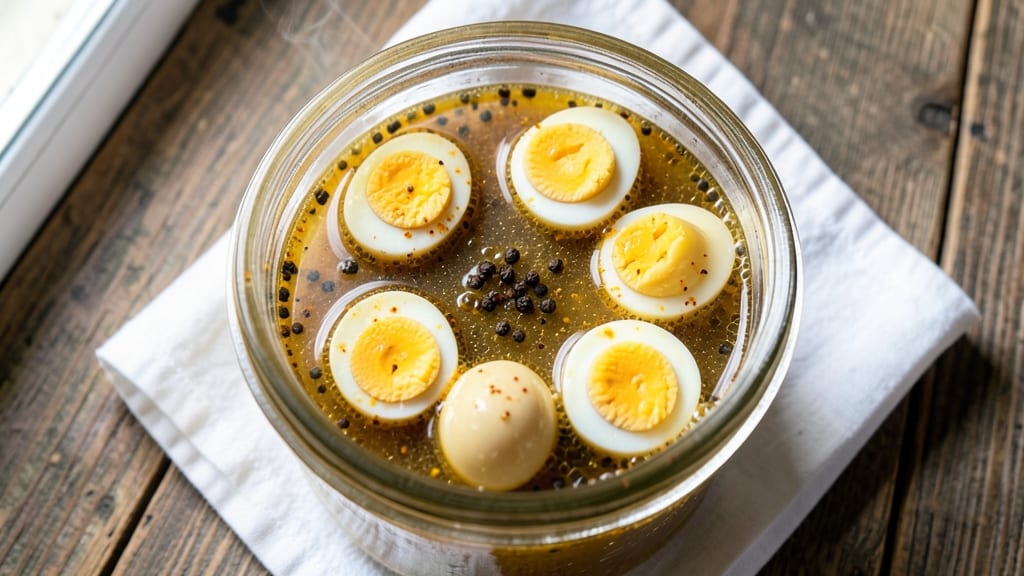
This old-fashioned mustard pickled eggs recipe transforms simple hard-boiled eggs into tangy, crunchy bites that elevate sandwiches and charcuterie boards with bold, vinegar-infused flavor. The traditional method uses a carefully balanced brine of vinegar, mustard, and spices that penetrates each egg, creating a texture that’s both crisp and tender.
I’ve perfected this technique over years of testing, ensuring the mustard’s sharpness never overpowers the eggs’ natural richness.
The key lies in the brine—equal parts vinegar and water, with mustard and spices layered in for depth. You’ll need just 15 minutes of prep followed by at least 24 hours of pickling for maximum flavor, though the wait is worth the reward.
This method preserves the eggs’ firm bite while infusing them with a tangy, mustard-forward profile that pairs perfectly with deli meats, cheese, or even on their own as a snack.
What you’ll end up with is a jar of vibrant yellow eggs coated in a glossy, mustard-kissed brine that adds a bold crunch to any dish. The mustard’s heat mellows slightly over time, leaving a complex, savory-sweet finish that’s addictive once you try it.
These eggs keep for up to 3 months in the fridge, making them a versatile pantry staple for sandwiches, salads, or as a quick snack.
Whether you’re a home cook looking to elevate classic sandwiches or a brunch enthusiast seeking a standout side, this recipe delivers restaurant-quality results with minimal effort. The process is simple, but the flavor transformation is nothing short of magical. Let’s get started!
Ingredients for old fashioned mustard pickled eggs
Twelve eggs and nine bold flavors transform into vibrant, mustard-kissed bites perfect for sandwiches and charcuterie boards.
| Ingredient | Amount | Notes |
|---|---|---|
| Large Eggs 🥚 | 12 whole | Hard-boiled, peeled, room temperature |
| White Vinegar 💧 | 2 cups | Distilled, 5% acidity preferred |
| Yellow Mustard 🌶️ | ½ cup | Prepared, no additives |
| Granulated Sugar 🍚 | ¼ cup | White, fine grain preferred |
| Diamond Crystal Kosher Salt 🧂 | 1 tbsp | Coarse grain preferred |
| Ground Black Peppercorns 🌶️ | 1 tsp | Freshly cracked preferred |
| Ground Turmeric 🌿 | ½ tsp | Bright yellow, vibrant color |
| Ground Mustard Seed 🌶️ | ½ tsp | Freshly ground for intensity |
| Water 💧 | 2 cups | Filtered or distilled preferred |
| Fresh Dill Sprigs 🌿 | 4 whole | For aromatic garnish |
| Garlic Cloves 🧄 | 2 cloves | Smashed for subtle flavor |
The eggs are the foundation, so choose large eggs with firm whites—they hold their shape best during pickling. Store-brand eggs from grocery chains like Kroger or Trader Joe’s work perfectly, but avoid eggs with any cracks or cloudy yolks. For the mustard, French’s or Hellmann’s prepared mustard are reliable choices, though Maille adds a touch of luxury with its smoother texture. The vinegar should be white vinegar with 5% acidity—higher acidity can overpower the eggs’ delicate flavor. If you’re sourcing spices, Penzeys or local spice merchants offer the freshest ground mustard seed and turmeric, which are critical for that authentic old-fashioned tang.
No yellow mustard? Dijon mustard thinned with a splash of vinegar works in a pinch, though the flavor profile shifts slightly. Running short on fresh dill? Dried dill at one-third the amount suffices, but fresh is ideal for that bright, aromatic finish. Substituting white vinegar? Apple cider vinegar adds subtle sweetness, while rice vinegar leans sharper—adjust the sugar to balance. The garlic and turmeric are non-negotiable for depth; omit them, and the eggs lose their signature golden hue and complex flavor. For a spicier kick, add a pinch of cayenne, but start small—mustard already packs heat.
Store the pickled eggs in an airtight glass jar in the fridge, submerged completely in the brine. They’ll develop their full flavor over 24 to 48 hours, with the mustard’s sharpness mellowing into a rich, savory-sweet balance. These eggs keep for up to 3 months in the fridge, though the first week yields the most vibrant color and texture. For serving, drain and pat dry before slicing—this prevents soggy sandwiches. The brine itself is edible and can be used as a tangy dressing for salads or a marinade for proteins, so don’t discard it!
Why You'll Love This Recipe
- No Boiling Required: I swear by this trick—just crack those eggs into jars, add the vinegar-mustard brine, and let time do the work. No standing over a pot, no peeling later, just pure hands-off magic.
- Tangy-Sweet Crunch: That mustard gives it a sharp, creamy bite while the vinegar keeps it bright—like a pickle but richer. Honestly, once you try it, plain eggs will feel boring.
- Picnic Party Hero: Slap these in a cooler with sandwiches or charcuterie, and you’ve got the star of any spread. They stay crisp for days, so you’re covered whether it’s a backyard BBQ or a last-minute potluck.
- Pantry Goldmine: Five ingredients, half of which you already have. The eggs get cheaper the more you buy, and the brine lasts forever—perfect for stretching your budget without sacrificing flavor.
Step-by-step instructions for old fashioned mustard pickled eggs
Transform hard-boiled eggs into vibrant, tangy condiments with this precise preservation method.
Prepare the Brine Solution
In a heatproof bowl, combine the 2 cups white vinegar, 2 cups water, 0.25 cup granulated sugar, 1 tbsp diamond crystal kosher salt, 1 tsp ground black peppercorns, 0.5 tsp ground turmeric, and 0.5 tsp ground mustard seed. Stir vigorously until the sugar and salt dissolve completely, creating a clear, amber-colored liquid. The solution should be at room temperature before proceeding.
Add the smashed 2 cloves garlic and 4 whole fresh dill sprigs to the brine. Let it infuse for 10 minutes at room temperature, allowing the aromatic compounds to fully extract. This infusion creates the signature depth of flavor that distinguishes these pickled eggs from basic vinegar preserves.
Create the Mustard Coating
In a separate bowl, prepare the mustard mixture by whisking together the 0.5 cup yellow mustard until completely smooth. The mustard should be free of any lumps to ensure even coating on each egg. This step is critical for achieving the characteristic mustard flavor that permeates the eggs during preservation.
Dip each of the 12 peeled, room-temperature eggs into the mustard mixture, ensuring complete coverage. Allow excess mustard to drip off before placing them in a clean, airtight glass jar. The mustard coating creates a flavor barrier that enhances the pickling process while adding its signature tangy bite.
Assemble and Seal the Preservation Jar
Carefully transfer the mustard-coated eggs into the prepared brine jar, packing them tightly but without crushing. Pour the infused brine over the eggs until they are completely submerged, leaving at least 1 inch of headspace at the top. This ensures proper preservation and prevents mold growth during storage.
Seal the jar tightly with a lid and invert it gently to mix the contents. This action helps distribute the mustard coating evenly and ensures all eggs come into contact with the flavorful brine. The inversion also helps remove any air bubbles that might interfere with the preservation process.
Cure at Room Temperature
Store the sealed jar at room temperature for 48 hours, allowing the eggs to absorb the mustard and vinegar flavors. During this period, check the jar daily and invert it gently to redistribute any settled mustard or sediment that may have formed at the bottom.
After 48 hours, transfer the jar to the refrigerator where the eggs will continue to develop their complex flavors. They are ready to eat immediately but will improve in flavor over the next 2-3 weeks. The eggs should maintain their vibrant yellow color from the turmeric and develop a firm, slightly crunchy texture.
Pro Tips For Making Old Fashioned Mustard Pickled Eggs
- USE FRESH EGGS ONLY: Old-fashioned recipes like this count on fresh eggs—crack one older than a week and the whites might turn to mush in the brine. If you’re using store-bought, grab the carton with the latest date stamped on it, or better yet, hit the farmers’ market for eggs laid within 48 hours.
- BOIL EGGS UNTIL COOL: I learned this the hard way—plopping hot eggs straight into ice water makes them crack like overripe peaches. Instead, boil them until the water’s steaming but not rolling, then let them sit in the pot for 5 full minutes before transferring. The gradual cool-down keeps the shells intact.
- MEASURE MUSTARD BY VOLUME: That jar of mustard has no consistency—thick one day, runny the next. Skip the eyeballing and use a measuring cup for the mustard powder (usually 1–2 tablespoons). Too little? The flavor fades. Too much? You’ll taste it like a condiment, not a subtle pickle.
- STIR THE BRINE DAILY: The first 24 hours are critical—stir the brine with a clean spoon every morning to distribute the sugar and salt evenly. I know, it’s annoying, but skipping this step means the eggs at the bottom get a muddy, underflavored bath while the top ones taste like gourmet. (Yes, even if you’re impatient like me.)
Regional styles of this dish
Southern Mustard Eggs
In the American South, these pickled eggs are a classic bar snack and sandwich topper, often served at tailgates and church potlucks.
The key difference here is the addition of 1 tbsp hot sauce (like Crystal or Tabasco) to the brine, which adds a fiery kick that balances the mustard’s sharpness.
I’ve seen Southern cooks use yellow mustard mixed with a pinch of cayenne for an extra layer of heat without overpowering the eggs. Serve them with crusty white bread or pimento cheese for a true Southern experience. 🌶️
Midwest Dill-Mustard Style
The Midwest takes a more herb-forward approach, often incorporating extra fresh dill and a touch of celery seed into the brine. I’ve noticed that Midwestern recipes tend to use Dijon mustard instead of yellow mustard for a smoother, more refined flavor.
These eggs pair beautifully with Reuben sandwiches or corned beef hash, which are staples in Midwest cuisine. The dill adds a bright, fresh contrast to the rich mustard flavor.
New England Vinegar-Heavy Brine
Up north, the focus shifts to a more vinegar-forward brine, often using apple cider vinegar instead of white vinegar. This gives the eggs a slightly sweeter, fruitier tang that complements the mustard. New England cooks also frequently add a splash of Worcestershire sauce to the brine for depth.
These eggs are a popular addition to lobster rolls or clam chowder as a tangy contrast to the seafood. The mustard’s sharpness cuts through the richness beautifully. 🍋
German Senf-Eier Tradition
Across the Atlantic, Germany’s Senf-Eier (mustard eggs) share the same core concept but often use Dijon mustard mixed with a touch of honey for a sweeter, more complex flavor. The brine typically includes mustard seeds, coriander, and bay leaves for an aromatic depth.
These eggs are traditionally served with pretzels, sausages, or dark rye bread. The honey balances the mustard’s sharpness, creating a flavor profile that’s both bold and approachable. 🥨
Modern Twist: Spicy Sriracha Mustard
For a contemporary take, swap the yellow mustard for a mix of sriracha and yellow mustard (equal parts) to create a spicy, tangy coating. Add 1 tsp sriracha to the brine for an extra kick.
These eggs pair perfectly with Asian-inspired sandwiches or tacos, offering a fusion of flavors that’s both familiar and exciting. The sriracha’s sweet heat complements the mustard’s sharpness, making these eggs a standout snack or appetizer. 🌶️
Nutrition facts
Frequently asked questions
Why do these pickled eggs need to cure at room temperature first?
The 48-hour room-temperature cure allows the mustard and vinegar to fully penetrate the eggs, creating that signature tangy crunch. Room temp also helps prevent bacterial growth during the initial preservation phase. After 48 hours, refrigeration slows flavor development while keeping them safe to eat for months.
Can I use Dijon mustard instead of yellow mustard?
Yes, but the texture and flavor will differ slightly. Dijon has a smoother, less grainy texture and a more complex flavor profile. For an authentic old-fashioned taste, stick with yellow mustard. If using Dijon, reduce the amount to 0.375 cup since it's more concentrated. The mustard's sharpness will mellow over time in the brine.
How do I store these eggs for maximum shelf life?
Keep them fully submerged in the brine in an airtight glass jar in the fridge for up to 3 months. The brine acts as a natural preservative. For longer storage, freeze the eggs (without brine) for up to 2 months. Always use clean utensils when serving to prevent contamination.
What if my eggs turn gray or smell off?
Gray eggs indicate improper pickling—likely not enough acidity (vinegar) or poor sealing. Discard them immediately. For prevention, ensure your vinegar is 5% acidity and the jar is properly sealed. The eggs should smell tangy and slightly mustardy, never sour or rotten. When in doubt, throw it out!
Can I make these with brown eggs instead of white?
Brown eggs work perfectly and may even have a slightly richer flavor. The pickling process treats them the same way, so color doesn't affect the outcome. The mustard and turmeric will still give them that vibrant yellow hue regardless of shell color.