
Side Dishes
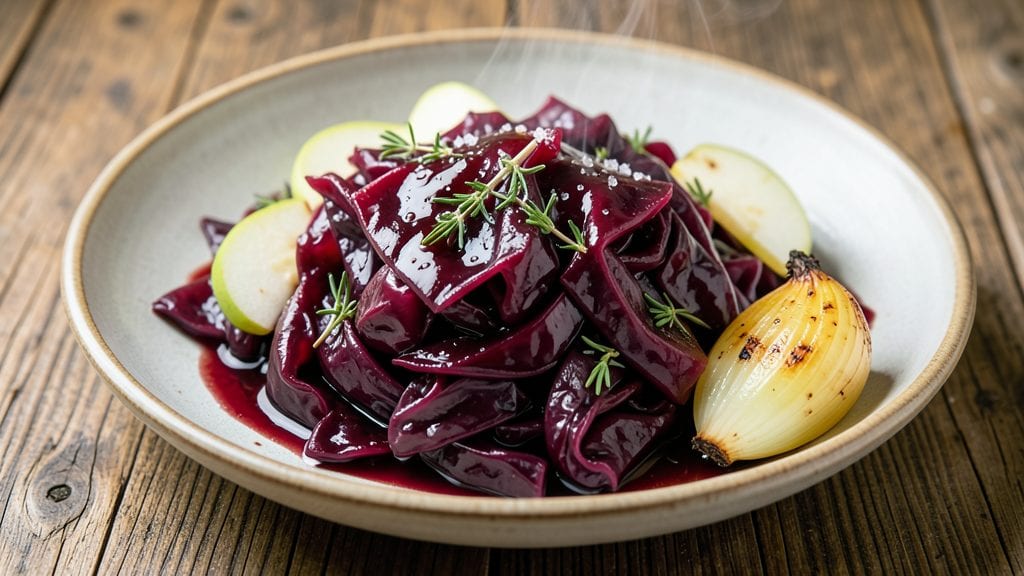
This traditional German red cabbage recipe brings the heart of German holiday feasts to your table with its perfect balance of sweet, tangy, and savory flavors. 🌟 The secret lies in slow braising with apples, vinegar, and warm spices like cinnamon and cloves, creating a dish that's rich in tradition yet simple to prepare.
I've perfected this recipe over years of holiday gatherings, ensuring tender cabbage and just the right acidity to cut through rich meats.
The magic happens during the long, gentle simmering process where the cabbage softens while absorbing the aromatic flavors of the braising liquid. A touch of bacon adds depth, though this vegetarian version skips it entirely without sacrificing authenticity.
What makes this recipe truly special is how it transforms humble ingredients into something festive and unforgettable—ideal for serving alongside sausages, roasted pork, or even as a standalone vegetarian centerpiece.
By the time you're done, you'll have a pot of vibrant red cabbage with tender leaves and a glossy, flavorful sauce that clings to every bite. The sweetness of the apples and the tang of vinegar create a perfect harmony that's both comforting and sophisticated.
This is the kind of dish that makes holiday tables feel complete, with flavors that tell a story of German tradition.
Ready in about 1 hour and 15 minutes, this recipe delivers restaurant-quality results with minimal effort. The slow cooking ensures tender cabbage while building deep, complex flavors. Serve warm with your favorite holiday meats or as a satisfying vegetarian side. Here's everything you need to bring this classic to life!
Ingredients for traditional german red cabbage
Sweet apples, tangy vinegar, and warm spices transform simple cabbage into holiday magic.
| Ingredient | Amount | Notes |
|---|---|---|
| Red Cabbage 🥬 | 1 ½ lb | Shredded, core removed |
| Granny Smith Apples | 2 medium | Peeled, cored, sliced thin |
| Granny Smith Apples 🍎 | 2 whole | Peeled, cored, sliced thin |
| Red Wine Vinegar 🍷 | ½ cup | Dry, not balsamic |
| Yellow Onion 🧅 | 1 whole | Thinly sliced |
| Granulated Sugar 🍚 | ¼ cup | Light brown preferred |
| Vegetable Oil 🫒 | 2 tbsp | For sautéing |
| Salt 🧂 | 1 ½ tsp | Kosher or sea salt |
| Black Peppercorns 🌶️ | ½ tsp | Freshly ground |
| Ground Cinnamon 🍃 | ½ tsp | Freshly ground preferred |
| Ground Cloves 🌿 | ¼ tsp | Whole cloves work too |
| Bay Leaves 🌿 | 2 whole | Fresh preferred |
| Fresh Thyme 🌿 | 1 tbsp | Leaves only, chopped |
The cabbage is the star, so pick a head that's firm and deep purple—the heavier it is, the better. Trader Joe's and Whole Foods usually carry the best quality. For the apples, Granny Smiths are ideal because their tartness balances the sweetness. If you can't find them, Fuji or Honeycrisp work too. The vinegar matters—dry red wine vinegar gives the best tang. If you only have balsamic, use half the amount. The onions? Yellow or red both work, but yellow adds a touch more sweetness to the mix.
No Granny Smiths? Green apples like Gala or Braeburn will do, but you might want to add a pinch more sugar. Running short on vinegar? Apple cider vinegar works in a pinch, but it's a bit milder. The spices are where the magic happens—Penzeys or Spicewalla have the best ground cinnamon and cloves, but regular grocery store brands are fine if they're fresh. Fresh thyme is ideal, but dried thyme at half the amount works if you're in a hurry. For the bay leaves, fresh is better, but dried won't ruin the dish.
This braises beautifully and tastes even better the next day. Store leftovers in an airtight container in the fridge for up to 5 days. It reheats perfectly—just warm it gently on the stove with a splash of water. For holiday gatherings, double the batch. The flavors deepen overnight, so make it the day before if you can. It's perfect for potlucks because it keeps well and reheats like a dream.
Why You'll Love This Recipe
- No-Sharp-Knife Night: I swear by this recipe when I’m too tired to dice cabbage properly. The onions and apples do most of the work—just slice them thick, and the vinegar softens everything as it cooks. (Between us, I’ve done this with a butter knife.)
- Sweet-Tart Magic: That Granny Smith apple? It’s the secret weapon. The sharpness cuts through the cabbage’s earthiness while the vinegar adds this bright, tangy punch—like a grown-up candy apple. Honestly, I’ll eat it straight from the pot.
- Holiday or Weeknight: This shows up at Thanksgiving tables but also saves my sanity on Tuesdays. Serve it with sausages for a hearty meal or toss it into sandwiches for a tangy crunch. My college-aged kids still beg for leftovers.
- Pantry Goldmine: Red cabbage lasts forever, apples stretch a meal, and red wine vinegar? Cheap. I make double batches—it keeps for days in the fridge and reheats like a dream. Budget-friendly doesn’t mean boring, especially when it’s this ridiculously good.
Step-by-step instructions for traditional German red cabbage
This classic holiday side delivers perfect balance—tender cabbage with just the right tangy-sweet bite.
🍳 Step 1: Sauté the Aromatics Until Fragrant
Heat the 2 tablespoons vegetable oil in a large Dutch oven over medium heat. Add the thinly sliced yellow onion and cook for 5-6 minutes until soft and translucent. You'll smell the onions mellowing—this is your signal they're ready.
Next, add the chopped fresh thyme, whole bay leaves, ground cinnamon, ground cloves, and freshly ground black peppercorns. Stir for 30 seconds until the spices are toasted and fragrant. The spices should smell warm and earthy—this builds the flavor foundation for the entire dish. Don't let them brown or they'll turn bitter.
👨🍳 Step 2: Cook the Apples Until Tender
Add the 4 peeled, cored, and thinly sliced Granny Smith apples (both the 2 medium and 2 whole apples) to the pot. Cook for 5-6 minutes until they soften slightly but still hold their shape. The apples should release their juices into the pot—this sweetness will balance the tangy cabbage later.
I like to press down gently on the apple slices during the first minute—this prevents them from curling and ensures even contact with the pan. If the apples start to stick, add 1 tablespoon water to deglaze the pan. The goal is tender apples that hold their form without turning mushy.
🥘 Step 3: Braise the Red Cabbage Low and Slow
Add the 1.5 lb shredded red cabbage (core removed) to the pot. Stir everything together, then pour in the 0.5 cup red wine vinegar and sprinkle with the 1.5 teaspoons salt. The cabbage should look glossy from the vinegar—this is when the magic happens.
Cover the pot and reduce heat to low. Simmer for 45-50 minutes until the cabbage is tender but still holds its shape. You'll know it's ready when a knife slides in easily and the cabbage releases its juices. Stir occasionally to prevent sticking—this is where patience pays off for that perfect texture.
⏰ Step 4: Sweeten and Simmer to Perfection
After the cabbage is tender, stir in the 0.25 cup granulated sugar. The dish will look less vibrant at first, but don't worry—this is crucial for that classic German sweet-tangy balance. Taste and adjust seasoning if needed, adding more salt or vinegar as necessary.
Simmer uncovered for another 10-15 minutes until the cabbage is glossy and the flavors have melded together. The sauce should coat the back of a spoon—this ensures every bite is moist and flavorful. If it's too thin, simmer longer; if too thick, add 1-2 tablespoons water. The cabbage should be fork-tender with just a slight bite.
🍽️ Step 5: Rest and Serve Warm
Remove the pot from heat and let the cabbage rest for 5-10 minutes before serving. This resting time allows the juices to redistribute, making each bite even more flavorful. Discard the bay leaves before serving—they've done their job infusing flavor.
Serve warm alongside roasted meats or sausages for that authentic German holiday experience. The cabbage should be vibrant pink with tender cabbage strands, sweet apples, and a glossy sauce that clings beautifully. Leftovers keep well in the refrigerator for up to 5 days, making this a perfect make-ahead dish for busy holiday gatherings.
Pro Tips For Making Traditional German Red Cabbage
- SHRED CABBAGE THIN: I learned this the hard way—thick strips mean uneven cooking. Aim for 1/8-inch slices so every piece softens at the same time, especially near the core. A sharp knife and a steady hand make this easier than it sounds.
- COOK ON MEDIUM-LOW: After burning three batches, I finally figured out that simmering on medium-low (not a rolling boil) keeps the onions sweet and the cabbage tender without turning it mushy. Yes, it takes longer, but it’s worth it.
- PEEL APPLES LAST: Sounds weird, but it works: peel and slice the apples right before adding them to the pot. The acid in the vinegar makes unpeeled apples bitter, and pre-sliced apples turn to mush faster than you’d think.
- DEGLAZE WITH VINEGAR: Don’t just pour in the vinegar at the end—use it to scrape up the browned bits from the onions while cooking. That extra flavor is the thing that matters most, and it takes 30 seconds. (Your future self will thank you.)
Creative variations of traditional german red cabbage
Bavarian-Inspired Sweet-Sour
For a richer, more complex flavor profile, swap the red wine vinegar for ½ cup apple cider vinegar and add 2 tbsp honey along with the sugar. This variation mimics the sweet-sour balance of Bavarian Rotkohl, where the apples take center stage.
I like to add ½ cup cooked bacon bits (or smoked tofu for vegetarians) for extra depth—this is how many Bavarian recipes handle the savory component. 🌟
Savory Herb Variation
Skip the apples entirely and focus on earthy flavors by adding 1 tbsp fresh rosemary (chopped) and 1 tbsp fresh sage with the thyme. Boost the vinegar to ⅔ cup and reduce sugar to 2 tbsp for a sharper, more herb-forward dish.
This version pairs beautifully with roasted game meats like venison or duck. The herbs should be added during the sautéing stage to infuse their oils into the cabbage.
Vegetarian with Mushrooms
For a heartier vegetarian option, sauté 8 oz sliced cremini mushrooms with the onions and add 1 tsp smoked paprika when cooking the cabbage. The mushrooms add umami that complements the tangy-sweet balance.
I also recommend adding ½ cup cooked lentils at the end for extra protein. This version works exceptionally well as a standalone vegetarian main dish during colder months. 🍄
Spiced Wine Braise
Replace the vinegar with ½ cup dry white wine (like Riesling) and add 1 star anise pod and 2 juniper berries (crushed) during the braising stage. These spices add an aromatic complexity that elevates the dish to restaurant-quality.
Remove the star anise and juniper before serving. This variation is inspired by Alsatian traditions and pairs wonderfully with duck or pork shoulder.
Winter Root Vegetable Twist
Add 1 cup diced celery root (celeriac) and 1 cup diced parsnips when cooking the apples. These roots add natural sweetness and heartiness that work beautifully with the cabbage.
Increase the simmering time by 10 minutes to ensure the roots soften completely. This version feels especially festive during winter holidays and adds a satisfying texture contrast. 🥕
Quick One-Pot Version
For a faster version, use ½ cup apple cider vinegar and ¼ cup chicken or vegetable broth instead of water to deglaze. Add 1 tsp mustard seeds (toasted) with the spices for a subtle kick.
This method reduces cook time by 15 minutes while maintaining the dish's signature tangy-sweet profile. Perfect for weeknight meals when you still want holiday-style flavors.
Nutrition facts
Frequently asked questions
Can I use green cabbage instead of red?
While red cabbage is traditional, you can substitute green cabbage—but expect a different flavor and color. The purple hue comes from anthocyanins, which also contribute to the dish's unique taste. If using green, add 1 extra tablespoon vinegar to compensate for the milder flavor. The texture will be similar, but the visual appeal won't be the same.
Why does my red cabbage turn mushy?
Overcooking is the most common cause—simmer just until tender (45-50 minutes). Covering the pot traps steam, which can make cabbage soggy. For best results, stir occasionally and check for doneness with a knife. If it's already mushy, try a faster method by adding 1 cup water and simmering uncovered for 10 minutes to evaporate excess moisture.
Can I make this vegetarian without bacon?
This recipe is already vegetarian, but for extra depth, try adding ½ cup cooked mushrooms or smoked paprika during braising. The apples and spices provide plenty of flavor without meat. For a heartier dish, stir in ½ cup cooked lentils at the end. The dish will still taste rich and satisfying.
How far ahead can I prepare this?
This dish actually tastes better the next day! Store leftovers in an airtight container in the fridge for up to 5 days. Reheat gently on the stove with a splash of water to restore moisture. For holiday meals, make it the day before—flavors meld beautifully overnight. If reheating, avoid microwaving to prevent a watery texture.
What's the best way to shred red cabbage?
Use a sharp knife or mandoline for even shreds. Cut the cabbage in half, remove the core, then slice thinly—about ⅛-inch thick. For speed, use a food processor with the shredding blade, but pulse briefly to avoid tearing. The thinner the shreds, the faster they cook. If using a mandoline, always cut away from your body for safety.